
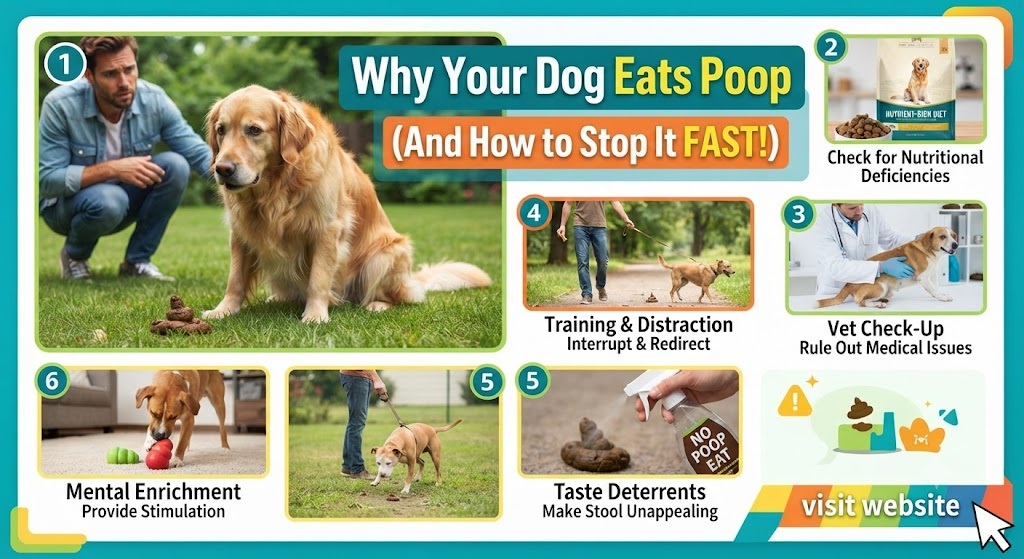

Why Your Dog Eats Poop (And the One Supplement That Stops It)
It is perhaps the single most horrifying moment a dog owner can experience. You’re in the backyard, enjoying a sunny afternoon, watching your beloved furry companion frolic in the grass. Suddenly, they stop, sniff a particular pile of “yard chocolate,” and before you can scream “No!”, they’ve consumed it.
The technical term is coprophagia, but most pet parents just call it “disgusting.”
If you’ve ever felt the recoil of a “poop-breath” kiss or wondered if your dog is lacking some vital part of their soul because they find feces delicious, you aren’t alone. In fact, a study presented at the American Society of Animal Behavior found that 1 in 6 dogs are “serious” stool eaters, meaning they’ve been caught in the act at least five times.
But why do they do it? Is it a sign of a deadly disease? Is your dog just “broken”? And most importantly, how do you make it stop?
In this comprehensive guide, we will dive deep into the biological, behavioral, and nutritional reasons behind this behavior. More importantly, we will reveal the one supplement backed by science that can finally put an end to this “stinky” habit for good.
The Evolutionary “Why”: It’s Not Just a Gross Habit
To solve the problem, we first have to understand that, to a dog, eating poop isn’t inherently “gross.” Dogs are scavengers by nature. Their ancestors, the wolves, didn’t have the luxury of a grain-free, high-protein kibble delivered in a ceramic bowl. They ate what they could find.
1. The Den Cleaning Instinct
In the wild, mother dogs (bitches) will eat the stools of their puppies to keep the “den” clean. This serves two purposes: it prevents the scent of feces from attracting predators to the vulnerable pups, and it keeps the nesting area hygienic. Puppies often mimic this behavior, learning that poop is something to be “disposed of.”
2. The Ancestral Scavenger Brain
Wolves were known to consume the feces of other animals to gain nutrients that they couldn’t get from meat alone. If a wolf ate a herbivore, they might consume the stomach contents or the stool to access predigested plant matter and essential enzymes. Your Labrador might just be tapping into a 10,000-year-old survival instinct.
Medical and Biological Triggers
Sometimes, coprophagia isn’t just “in the DNA”—it’s a cry for help from the body. If your dog suddenly starts eating poop after years of being a “clean” eater, a trip to the vet is mandatory.
Vitamin and Mineral Deficiencies
If a dog’s diet is lacking in specific nutrients—most notably Vitamin B (Thiamine)—they may seek it out in stool. Historically, dogs eating poop was a primary indicator of a malnutrition issue. Even with modern dog foods, if the food is low quality or high in “fillers,” the dog may not be absorbing what they need.
Exocrine Pancreatic Insufficiency (EPI)
This is a serious medical condition where the pancreas does not produce enough digestive enzymes. Without these enzymes, the dog cannot break down food. They are essentially starving despite eating full meals. Because the food passes through them undigested, their stool still smells and tastes exactly like the food they just ate. They eat it to try and “re-process” those lost nutrients.
Parasites
Internal parasites like hookworms, roundworms, and tapeworms leach nutrients from your dog’s intestinal tract. This creates a nutritional deficit, leading the dog to seek out “extra” calories anywhere they can find them—including the backyard.
The Behavioral Component: Stress, Boredom, and Attention
If the vet gives your dog a clean bill of health, the issue is likely behavioral. Dogs are emotionally complex creatures, and their “toilet habits” often reflect their mental state.
1. The Attention Paradox
Believe it or not, some dogs eat poop because they want you to talk to them. Even if you are screaming “STOP THAT!” and chasing them around the yard, that is considered high-value attention to a bored dog. They learn that “If I touch the poop, the human plays the chasing game with me.”
2. Anxiety and Punishment
If you used the old-school (and ineffective) method of rubbing a dog’s nose in their “accidents” during potty training, you might have accidentally created a poop-eater. The dog becomes so afraid of the presence of stool (because they associate it with punishment) that they eat the “evidence” to hide it from you.
3. Isolation and Boredom
Dogs left alone in small crates or yards for long periods with nothing to do will often turn to the only “toy” available to them. Coprophagia in shelter environments is incredibly common because of the high stress and low stimulation levels.
The Nutritional “Smell” Trap
One of the most common reasons modern dogs eat poop is the nature of kibble.
Many commercial dog foods are packed with artificial flavorings and “palatants” designed to make the dog want to eat the dry pellets. These flavorings are often so strong that they survive the entire digestive process. When the dog poops, the stool literally smells like the bowl of food they just finished.
Furthermore, if a dog’s digestive system isn’t efficient, the stool remains high in undigested protein and fats. To a dog’s nose, that’s not waste—it’s “Second-Chance Kibble.”
The Health Risks: Why You Must Stop It
While eating their own poop is generally “safe” (though disgusting), the habit carries significant risks if they consume the stool of other animals.
- Contraction of Parasites: Consuming the stool of stray dogs, cats, or wildlife (like deer or geese) can lead to Giardia, Coccidia, and various worms.
- Salmonella and E. Coli: While dogs have hardy digestive systems, high loads of these bacteria can lead to severe diarrhea and vomiting.
- Toxins: If the animal that produced the stool was on medication (like certain dewormers or heart medications), those chemicals can be passed on to your dog.
Common “Old Wives’ Tale” Remedies (That Don’t Work)
Before we get to the supplement that actually works, let’s debunk the “quick fixes” that usually fail:
- Hot Sauce or Cayenne Pepper: People often suggest dousing the stool in hot sauce. The problem? You have to find every pile of poop before the dog does to apply it. It’s a logistical nightmare.
- Pineapple: It is said that feeding a dog pineapple makes their poop taste bad. While it works for some dogs, it’s high in sugar and doesn’t address the underlying digestive issues.
- Pumpkin: Great for fiber, but rarely stops a dedicated poop-eater.
- Punishment: As mentioned before, punishing the dog usually makes the behavior worse or teaches them to be faster at eating it before you catch them.
The “One Supplement” That Stops It: Digestive Enzymes + Probiotics + Taste Deterrents
If you want to stop coprophagia, you have to attack the problem from two angles: Biological Satisfaction and Sensory Aversion.
The “One Supplement” isn’t actually a single ingredient, but a specific synergistic blend that targets the root cause of the craving while making the result unappealing.
The Component 1: Alpha-Amylase and Protease (Digestive Enzymes)
The primary reason dogs eat poop is that they aren’t fully digesting their food. By adding a high-quality Digestive Enzyme supplement to their meal, you ensure that every gram of protein, fat, and carbohydrate is broken down in the stomach.
When the food is fully digested:
- The dog feels “fuller” and more nutritionally satisfied.
- The resulting stool has almost no nutritional value left.
- The stool loses the “food-like” smell that attracts the dog.
The Component 2: Bacillus Coagulans (Probiotics)
A healthy gut microbiome reduces the “pica” (the urge to eat non-food items). Probiotics balance the bacteria in the gut, reducing gas and bloat, and ensuring the intestinal lining is healthy enough to absorb nutrients.
The Component 3: Yucca Schidigera and Breath Fresheners
This is the “Deterrent” part of the supplement. Yucca Schidigera is a plant extract that, when digested, changes the pH and the odor profile of the stool. While it doesn’t hurt the dog, it makes the stool smell and taste incredibly bitter to them.
When you combine these three, you create a “Perfect Storm” for stopping coprophagia:
- The dog gets more nutrients (reducing the urge to scavenge).
- The poop stops smelling like food (reducing the attraction).
- The poop tastes terrible (providing immediate negative reinforcement).
How to Choose the Right Supplement
When looking for a “Poop Eating Deterrent” supplement, don’t just buy the cheapest one at the big-box store. Look for these specific criteria on the label:
- Transparency: Does it list the specific enzymes (Alpha-Amylase, Lipase, Protease)?
- CFU Count: For the probiotics, you want at least 1 billion CFUs (Colony Forming Units) per serving.
- MSG-Free: Some low-quality supplements use Monosodium Glutamate to change the taste. Avoid this, as MSG can cause sensitivity in some dogs. Look for natural bittering agents like Parsley or Yucca.
- Palatability: If the supplement tastes like a treat (duck or chicken flavored chews), it’s much easier to administer than a pill.
A Step-By-Step Protocol to Stop the Habit
While the supplement is the “magic bullet,” it works best when paired with a management plan. Here is the 30-day protocol to reclaim your backyard:
Phase 1: The “Clean Sweep” (Days 1-7)
You must remove the temptation while the supplement builds up in the dog’s system.
- Leash Walks Only: Even in your own backyard, keep the dog on a leash.
- Immediate Pickup: As soon as the dog goes, pick it up. Do not give them the chance to even sniff it.
- Start the Supplement: Begin the recommended dosage of the Digestive Enzyme/Deterrent supplement with every meal.
Phase 2: The “Leave It” Command (Days 8-21)
Now that the supplement is making the stool less attractive, you need to retrain the brain.
- When your dog sniffs near a “forbidden snack,” use a firm “Leave It” command.
- When they look away from the stool and at you, reward them with a high-value treat (something much better than poop, like a piece of freeze-dried liver).
- They will begin to associate “not eating poop” with “getting a delicious treat.”
Phase 3: Testing the Waters (Days 22-30)
- Allow the dog off-leash under supervision.
- By now, the supplement has changed the “flavor” of the waste. If the dog does try to take a nibble, they will likely find it repulsive and stop on their own.
- Continue the supplement for at least 3-6 months to break the habit completely.
Specific Scenarios: The “Cat Box” Conundrum
Many dog owners find that their dog doesn’t eat their own poop, but they treat the cat’s litter box like a “snack bar.”
This is because cat food is significantly higher in protein and fat than dog food. Consequently, cat poop is a protein-dense “superfood” in the eyes of a dog.
The Solution:
- Physical Barriers: Use a “top-entry” litter box or a baby gate that the cat can jump over but the dog cannot get through.
- Give the Cat the Supplement: If the dog is eating the cat’s poop, the deterrent supplement must be fed to the cat (ensure it is a cat-safe formula). This makes the cat’s waste taste bad to the dog.
Frequently Asked Questions (FAQ)
Is it a sign of pica?
Yes, coprophagia is a form of pica (eating non-food items). While often behavioral, it can be linked to anemia or thyroid issues, so always consult a vet if the behavior is obsessive.
Can puppies grow out of it?
Most do! Puppies are like toddlers; they explore the world with their mouths. However, if you don’t intervene with a supplement or training, it can become a lifelong habit.
Will changing my dog’s food help?
Switching to a high-quality, “low-residue” diet (one with fewer fillers) can help because there is less “waste” coming out the other end. However, without the enzymes in the supplement, the transition might be slow.
Is it dangerous for my dog to eat goose or deer poop?
Yes. Wildlife feces often contain coccidia, salmonella, and various worms. If your dog is a “wildlife gourmet,” the deterrent supplement is even more critical to break the habit before they get sick.
The Verdict: Don’t Live with Poop-Breath
You don’t have to accept coprophagia as a “quirk” of your dog’s personality. It is a biological and behavioral puzzle that can be solved with the right tools.
By addressing the nutritional gaps with high-quality digestive enzymes and creating a sensory aversion with natural bittering agents, you can stop the cycle. Combine the “One Supplement” with consistent yard cleanup and positive reinforcement, and you’ll be able to enjoy those doggy kisses once again—without the cringing.
Ready to stop the gross-out? Look for a supplement containing Alpha-Amylase, Probiotics, and Yucca Schidigera today. Your nose (and your dog’s gut) will thank you.