
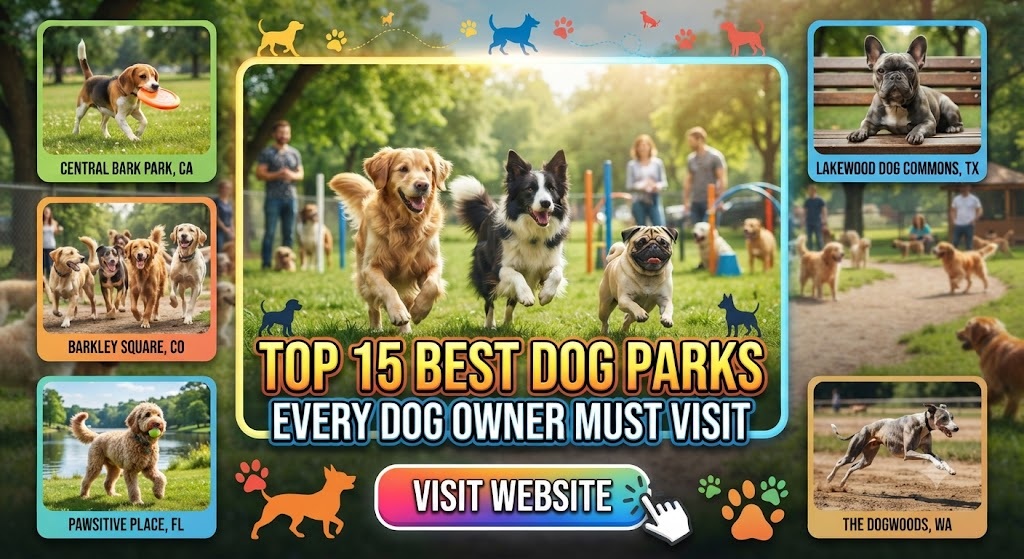

Top Destinations, Hidden Safety Secrets, and Expert Tips for a Happy Pup
For a dog, the words “park” or “outside” are more than just vocabulary; they are a call to adventure. A dog park is the canine equivalent of a five-star resort, a high-stakes social club, and an Olympic training ground all rolled into one. It is a place where tails wag in synchronized rhythm and the air is filled with the joyous barks of newfound friends.
However, as any seasoned dog owner knows, the dog park can also be a place of sensory overload, unpredictable behavior, and hidden hazards. To ensure your furry best friend gets the most out of their “zoomie” sessions, you need more than just a leash and a plastic bag. You need a comprehensive strategy.
In this ultimate guide, we will explore the world’s most iconic dog parks, dive deep into the unwritten rules of park etiquette, and arm you with the safety knowledge required to keep every outing stress-free.
Part 1: Destination Unleashed – The Best Dog Parks in North America
While your local fenced-in patch of grass is wonderful, some dog parks transcend the ordinary. These “bucket-list” destinations offer breathtaking views, massive acreage, and specialized amenities that make them a paradise for pups and humans alike.
1. Huntington Dog Beach – Huntington Beach, California
If your dog dreams of being a “surfer dude,” this is the place. Spanning over a mile of golden sand, Huntington Dog Beach is one of the few places in Southern California where dogs can run off-leash along the Pacific Ocean.
- Why it’s viral: The sight of dozens of Corgis and Golden Retrievers riding the waves is Instagram gold.
- The Vibe: High energy, salty air, and pure freedom.
2. Bear Creek Dog Park – Colorado Springs, Colorado
Nestled at the base of the mountains, Bear Creek is a 25-acre wonderland. It features a bubbling creek where dogs can cool off, open prairies for sprinting, and wooded trails for sniffing.
- Why it’s viral: It’s consistently ranked as one of the top dog parks in the U.S. due to its sheer size and the variety of terrain.
- The Vibe: Rugged, outdoorsy, and perfect for high-energy breeds.
3. Tompkins Square Dog Run – New York City, New York
Located in the heart of the East Village, this is historically significant as New York City’s first dog run. It features state-of-the-art crushed granite surfaces and separate areas for large and small dogs.
- Why it’s viral: The annual Halloween Dog Parade is a global sensation, featuring the most elaborate dog costumes you’ve ever seen.
- The Vibe: Urban, chic, and incredibly social.
4. Point Isabel Regional Shoreline – Richmond, California
Boasting over 23 acres of off-leash trails along the San Francisco Bay, Point Isabel is a powerhouse destination. It even features “Muddy Paws,” a dog washing station and cafe where owners can grab a latte while their pup gets a bath.
- Why it’s viral: It receives over a million visitors annually, making it one of the most popular dog parks in the world.
- The Vibe: Massive scale with stunning views of the Golden Gate Bridge.
5. Beneful Dream Dog Park – Alabaster, Alabama
This park is the result of a $500,000 makeover and looks like something out of a cartoon. It features synthetic turf, water sprayers, hoop jumps, and even a miniature football field for the dogs.
- Why it’s viral: The vibrant colors and “theme park” aesthetic make for incredible photography.
- The Vibe: Playful, manicured, and family-friendly.
Part 2: The Unwritten Rules – Dog Park Etiquette for Humans
A dog park is a shared community space. While the dogs are there to play, the humans are there to manage the environment. To avoid being “that person” at the park, follow these essential etiquette guidelines.
1. The 100% Supervision Rule
Your phone is your biggest enemy at the dog park. Dog fights can happen in a split second. If you are scrolling through TikTok, you are missing the subtle body language cues that precede a conflict. Keep your eyes on your dog at all times.
2. Pick Up the Poop (Every Single Time)
This isn’t just about cleanliness; it’s about public health. Dog waste can carry parasites like Giardia and Hookworms, which can live in the soil for weeks. Always carry extra bags and help pick up “orphan” poops to keep the community healthy.
3. Leave the Food at Home
Bringing high-value treats or a sandwich into a dog park is a recipe for disaster. Many dogs have “resource guarding” issues. If you walk in with a pocket full of bacon, you might find yourself at the center of a canine mosh pit, which can quickly turn aggressive.
4. Know Your Gates
Never open both gates at the entrance at the same time. These “airlock” systems are designed to prevent accidental escapes. Wait until the first gate is securely latched before opening the second.
5. Size Matters
If the park has a separate “Small Dog” area, use it. Even the friendliest Great Dane can accidentally injure a Chihuahua during play. Respecting the size divisions keeps everyone safe.
Part 3: Safety First – Decoding Canine Body Language
Understanding what your dog is “saying” is the most important skill you can have at the park. Play can look like fighting, and a “smile” can sometimes be a warning.
The Signs of Happy Play
- The Play Bow: Front legs down, rump in the air. This is the universal sign for “Everything I do from now on is just a joke.”
- Bouncy Movements: Happy dogs move in a loose, exaggerated, “floppy” way.
- The Self-Handicap: A large dog will purposefully lie on its back or slow down to let a smaller or slower dog “win” the game.
- Open Mouths: Relaxed, panting mouths often indicate a dog is having a good time.
The “Red Flag” Warning Signs
- Body Stiffness: If a dog freezes and becomes rigid, a fight may be imminent.
- Raised Hackles (Piloerection): The hair on the back standing up. This indicates intense arousal or fear (though not always aggression, it’s a sign to be cautious).
- Lip Curling and Low Growling: These are clear “back off” signals.
- The “T” Position: When one dog puts its head over the shoulders of another dog in a T-shape, it is a display of dominance that can lead to a scuffle.
- Hyper-Fixation: If a dog is staring intensely at another dog and won’t break eye contact, they are “locking on.” Interrupt this immediately.
The Three-Second Rule
If you aren’t sure if two dogs are playing or if one is being bullied, use the “Consent Test.” Gently pull the suspected “aggressor” back for three seconds. If the other dog immediately runs away, the play was too rough. If the other dog follows the “aggressor” and tries to re-engage, they were likely having fun.
Part 4: Health and Wellness – Protecting Your Pup from Invisible Threats
The dog park is a melting pot of germs. Beyond the physical bumps and bruises, there are biological risks to consider.
1. The Water Bowl Dilemma
Shared water bowls are a primary breeding ground for Leptospirosis and Giardia. While many parks provide bowls, it is significantly safer to bring your own collapsible bowl and a fresh bottle of water.
2. Vaccination Requirements
Before heading to the park, ensure your dog is up to date on:
- Rabies (Legally required)
- Distemper/Parvo
- Bordetella (Kennel Cough)
- Leptospirosis (Especially if there is standing water or wildlife nearby)
- Canine Influenza
3. Heatstroke Prevention
Dogs don’t sweat like we do; they dissipate heat through panting and their paw pads. On hot days, the “zoomies” can lead to heatstroke in minutes.
- The 5-Second Rule: Touch the pavement with the back of your hand. If you can’t hold it there for 5 seconds, it’s too hot for your dog’s paws.
- Symptoms of Heatstroke: Excessive drooling, bright red gums, lethargy, and vomiting. If you suspect heatstroke, get your dog to a cool area and call a vet immediately.
4. Flea, Tick, and Heartworm Prevention
A park with tall grass is a paradise for ticks. Ensure your dog is on a monthly preventative year-round. After every park visit, do a “tick check” through their fur, especially behind the ears and between the toes.
Part 5: Breaking Up a Fight – What to Do When Things Go Wrong
Even the best-behaved dogs can have a bad day. If a fight breaks out, your instinct will be to reach in and grab collars. Do not do this. This is the fastest way to get bitten (redirected aggression).
The Wheelbarrow Method
This is the safest way to break up a dog fight.
- Two people are needed (one for each dog).
- Grab the dog’s hind legs (at the thighs) and lift them off the ground like a wheelbarrow.
- Walk backward, away from the other dog.
- Once separated, turn the dog around so they cannot see the opponent.
The Noise Distraction
Sometimes a loud, sudden noise—like a sharp whistle, a scream, or slamming a gate—can startle the dogs into breaking their focus for a split second, allowing you to intervene.
The Water Method
If a hose is available, spraying the dogs in the face with water is often highly effective at ending a scuffle without physical risk to the owners.
Part 6: Training for the Park – Essential Skills Every “Park Dog” Needs
You shouldn’t take a dog to an off-leash park until they have mastered a few basic commands. The park is the ultimate “distraction environment,” so their training needs to be rock solid.
1. The Perfect Recall (“Come”)
Your dog must come to you 10 times out of 10, regardless of what they are doing.
- Pro Tip: Never call your dog just to leave the park. If “Come” always means the fun is over, they will stop coming. Call them, give them a high-value treat, and then release them back to play.
2. “Leave It”
This command can save your dog’s life. Whether they are about to eat something disgusting or are sniffing a dog that clearly doesn’t want to play, a strong “Leave It” allows you to redirect them from a distance.
3. The “Watch Me” Command
This builds engagement. If you can get your dog to look at you amidst the chaos of 20 other dogs, you have total control.
Part 7: Alternatives to Traditional Dog Parks
Not every dog is a “dog park dog,” and that is okay! Some dogs are “selective” (they only like certain friends) or “reactive” (they get overwhelmed by other dogs).
1. Sniffspot
Often called the “Airbnb for dog parks,” Sniffspot allows you to rent private, fenced-in backyards or acreage for your dog. It’s perfect for reactive dogs or those who just want a quiet space to sniff without being pestered.
2. Hiking Trails
A “decompression walk” on a long lead in the woods can provide more mental stimulation than an hour at a dog park. The variety of scents in a natural environment is like reading a novel for a dog’s nose.
3. Indoor Dog Parks
In cities with extreme weather (hot or cold), indoor dog parks offer climate-controlled environments with supervised play. These are often cleaner and more regulated than public outdoor parks.
Part 8: The Dog Park Gear List – Don’t Leave Home Without It
To make your trip successful, pack a dedicated “Park Bag.”
- Collapsible Water Bowl: Avoid the “communal bowl of germs.”
- Fresh Water Bottle: Especially in summer.
- Biodegradable Poop Bags: Be a responsible neighbor.
- A Standard 6-Foot Leash: Never use a retractable leash at a dog park. They can cause severe friction burns and offer zero control in an emergency.
- Pet First Aid Kit: Include antiseptic wipes, gauze, and a tick removal tool.
- High-Value Treats: For reinforcing that “Recall” command.
- A Towel: For those inevitable muddy paws.
Part 9: Viral Content Ideas – Sharing Your Dog Park Adventures
If you’re a pet influencer or just want to share your pup’s joy, dog parks are content goldmines.
- The “Zoomie” Slow-Mo: Use the slow-motion feature on your phone to capture the sheer athleticism (and funny faces) of a dog at full sprint.
- The “Before and After”: Show your dog’s high-energy excitement on the way to the park versus their “passed out” state in the car on the way home.
- Breed Meetups: Many parks have specific days for Corgis, Pugs, or Goldens. A sea of 50 identical dogs is guaranteed to go viral.
- Review Series: Create a “Dog Park Critic” series on TikTok or Instagram, rating parks on “Sniffability,” “Grass Quality,” and “Fetch Potential.”
Conclusion: The Secret to a Perfect Park Day
The best dog park experience isn’t about the fanciest equipment or the most beautiful view; it’s about the bond between you and your dog. When you go to the park, you aren’t just a spectator; you are your dog’s partner.
By staying vigilant, respecting etiquette, and understanding the subtle language of tails and ears, you turn a simple walk into a meaningful adventure. So grab the leash, fill the water bottle, and head out. Your dog’s best day ever is just a car ride away.
Remember: A tired dog is a happy dog, but a safe dog is a lucky one.