
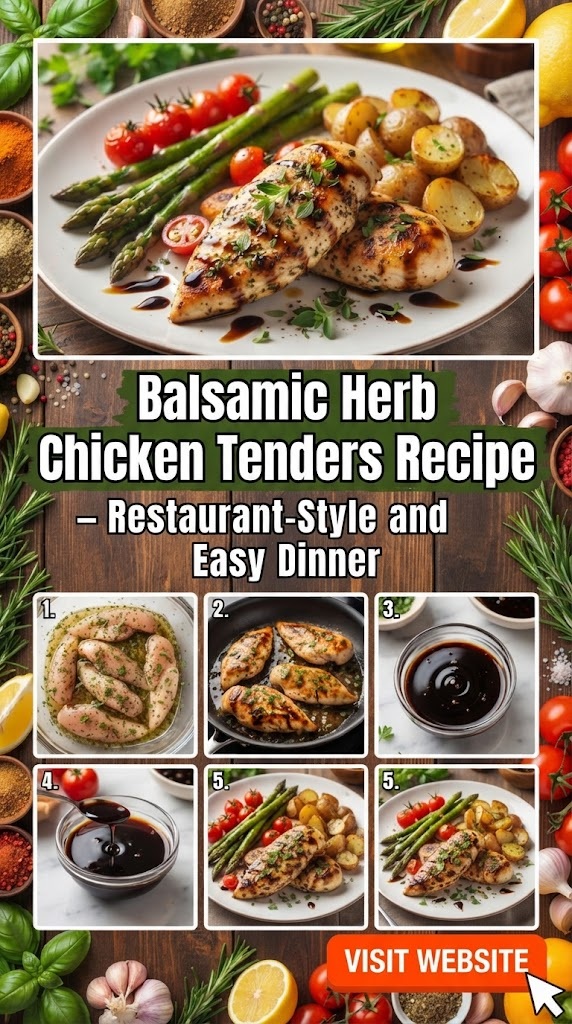

When it comes to weeknight dinners, we often find ourselves caught in a cycle of the “same old, same old.” We reach for the frozen bag of breaded nuggets or the standard lemon-pepper chicken breast. But what if you could elevate your dinner table with a dish that tastes like it came straight from a high-end Italian bistro, yet requires less than 30 minutes of active work?
Enter the Balsamic Herb Chicken Tenders. This recipe is the perfect intersection of sophisticated flavor and family-friendly convenience. These aren’t your average childhood chicken strips; they are succulent, deeply caramelized, and bursting with a complex profile of tangy vinegar, sweet honey, and aromatic Mediterranean herbs.
In this comprehensive guide, we will dive deep into why this recipe works, the science behind the marinade, the best cooking methods for maximum juiciness, and how to pair these tenders with sides that will make your meal a five-star experience.
Why Balsamic Herb Chicken Tenders Are a Game Changer
The magic of this recipe lies in the balance. Balsamic vinegar is one of the most versatile ingredients in a chef’s pantry. It provides acidity to tenderize the meat, sugar to aid in caramelization (the Maillard reaction), and a depth of flavor that is both fruity and earthy. When paired with the woody notes of rosemary and the floral punch of thyme, you create a flavor profile that is irresistible.
The Nutritional Advantage
Unlike traditional fried chicken tenders, these are not weighed down by heavy breading or deep-frying oils. By pan-searing or baking them, you retain the lean protein benefits of the chicken while infusing it with heart-healthy fats like olive oil. This recipe is naturally:
- High in Protein: Essential for muscle repair and satiety.
- Low in Refined Carbs: No flour or breadcrumbs are required.
- Gluten-Free: As long as you use a high-quality balsamic vinegar.
- Refined Sugar-Free: We use natural honey or maple syrup for sweetness.
A Deep Dive into the Ingredients
To achieve restaurant-quality results, you must start with quality ingredients. Here is a breakdown of what you’ll need and why each component matters.
1. The Chicken: Tenders vs. Breasts
While you can certainly slice chicken breasts into strips, using actual chicken tenderloins (the small strip of meat attached to the underside of the breast) is preferred. The tenderloin is a separate muscle that is more delicate and tends to stay moister during high-heat cooking. If you use breasts, ensure you slice them against the grain to maintain tenderness.
2. The Balsamic Vinegar
Not all balsamic vinegars are created equal. For this recipe, you don’t need a $100 bottle of traditional aged balsamic, but you should avoid the watery “balsamic-flavored” vinegars often found in bargain bins. Look for “Balsamic Vinegar of Modena” with a slightly syrupy consistency. This ensures the marinade coats the chicken effectively.
3. The Oil
Extra virgin olive oil is the gold standard here. It carries the flavor of the herbs and provides the fat necessary to prevent the chicken from sticking to the pan.
4. The Sweetener: Honey or Maple Syrup
Balsamic vinegar is acidic. To balance that “bite,” a touch of sweetness is necessary. Honey works beautifully as it helps create a sticky glaze that clings to the chicken. If you are vegan or prefer a different flavor profile, maple syrup offers a lovely woody sweetness.
5. The “Holy Trinity” of Herbs
For a truly aromatic experience, use fresh herbs if possible.
- Rosemary: Provides an earthy, pine-like aroma.
- Thyme: Adds a subtle minty and citrusy layer.
- Oregano: Brings that classic Mediterranean “pizza-herb” savoriness.
- Pro Tip: If using dried herbs, remember they are more potent than fresh. Use about one-third of the amount called for in the fresh version.
6. Garlic
Freshly minced garlic is non-negotiable. Garlic powder is fine in a pinch, but the way fresh garlic browns in the pan alongside the balsamic vinegar creates a depth of flavor that powder simply cannot replicate.
The Recipe: Balsamic Herb Chicken Tenders
Prep time: 10 minutes | Cook time: 10-12 minutes | Total time: 22 minutes (plus marinating)
Ingredients List
- 1.5 lbs Chicken Tenderloins (approx. 10-12 pieces)
- 1/4 cup High-quality Balsamic Vinegar
- 2 tablespoons Extra Virgin Olive Oil
- 1 tablespoon Honey
- 3 cloves Garlic, minced
- 1 teaspoon Fresh Rosemary, finely chopped
- 1 teaspoon Fresh Thyme leaves
- 1/2 teaspoon Dried Oregano
- 1/2 teaspoon Red Pepper Flakes (optional, for a hint of heat)
- 1 teaspoon Sea Salt
- 1/2 teaspoon Cracked Black Pepper
- Fresh Parsley for garnish
Step-by-Step Preparation
Step 1: Prepare the Marinade
In a medium-sized bowl or a large Ziploc bag, whisk together the balsamic vinegar, olive oil, honey, minced garlic, rosemary, thyme, oregano, red pepper flakes, salt, and pepper. Ensure the honey is fully dissolved into the liquid.
Step 2: The Marinating Process
Place the chicken tenders into the marinade. If using a bag, massage the liquid into the meat to ensure every inch is covered.
- How long to marinate? Because balsamic vinegar is acidic, you don’t want to marinate for too long, or the acid will begin to “cook” the chicken and turn it mushy.
- Minimum: 30 minutes.
- Optimal: 2 hours.
- Maximum: 6 hours.
Step 3: Searing to Perfection (The Stovetop Method)
This is the best method for achieving that restaurant-style crust.
- Heat a large cast-iron or heavy-bottomed skillet over medium-high heat. Add a splash of olive oil.
- Once the pan is shimmering, remove the chicken from the marinade, letting the excess liquid drip off (but don’t pat them dry).
- Place the chicken in the pan. Do not crowd the pan. If necessary, work in two batches. Crowding the pan lowers the temperature and causes the chicken to steam rather than sear.
- Cook for 4-5 minutes on the first side without moving them. This allows the balsamic sugars to caramelize.
- Flip and cook for another 4-5 minutes or until the internal temperature reaches 165°F (74°C).
- In the last 2 minutes of cooking, you can pour the remaining marinade into the pan to reduce it into a thick glaze.
Step 4: The Finishing Touch
Remove the tenders from the heat and let them rest for 3-5 minutes. This allows the juices to redistribute, ensuring every bite is moist. Garnish with fresh parsley and perhaps an extra drizzle of balsamic glaze.
Alternative Cooking Methods
The Oven-Baked Method
If you prefer a hands-off approach or are cooking for a large crowd:
- Preheat your oven to 400°F (200°C).
- Line a baking sheet with parchment paper or a silicone mat.
- Arrange the marinated chicken in a single layer.
- Bake for 15-18 minutes, flipping halfway through.
- For extra color, broil for the last 2 minutes.
The Air Fryer Method
For those who love the “fried” texture with less oil:
- Preheat the air fryer to 375°F (190°C).
- Place the tenders in the basket in a single layer.
- Cook for 10-12 minutes, shaking the basket halfway through.
- The air fryer circulates heat so efficiently that the balsamic glaze will become beautifully tacky and concentrated.
The Science of Flavor: Why This Combination Works
Understanding the “why” behind a recipe makes you a better cook. This dish relies on the balance of five flavor profiles:
- Acid (Balsamic Vinegar): Breaks down the tough protein fibers in the chicken.
- Fat (Olive Oil): Conducts heat and carries the fat-soluble compounds of the herbs (rosemary and thyme) into the meat.
- Sweet (Honey): Counteracts the sharpness of the vinegar and creates the “glaze” through the caramelization of sugars.
- Salt: Enhances all other flavors and helps the meat retain moisture.
- Umami (Garlic & Oregano): Provides the savory “backbone” that makes the dish feel satisfying and hearty.
Expert Tips for the Best Chicken Tenders
- Room Temperature Meat: Take the chicken out of the fridge about 15 minutes before cooking. Cold meat hits a hot pan and seizes up, making it tougher.
- Deglaze the Pan: If you are pan-searing, there will be “fond” (brown bits) left on the bottom. Add a splash of chicken broth or white wine to the pan after removing the chicken, scrape the bits up, and pour that “liquid gold” over your chicken.
- Use a Meat Thermometer: Overcooked chicken is the enemy of a good dinner. 165°F is the safe mark, but you can pull the chicken at 162°F and let the carry-over cooking during the resting period take it the rest of the way.
- Freshness Matters: If your dried herbs have been in the cabinet since the previous administration, throw them out. Fresh, vibrant herbs or recently dried ones make a world of difference.
Perfect Pairings: What to Serve with Balsamic Chicken
To turn these tenders into a full meal, you need sides that complement the tangy and savory notes.
1. Grains and Starches
- Garlic Mashed Potatoes: The creamy texture of the potatoes is the perfect foil for the sharp balsamic glaze.
- Lemon Herb Quinoa: A lighter, protein-packed option that mirrors the herbal notes of the chicken.
- Orzo with Spinach and Feta: A Mediterranean classic that pairs perfectly with the balsamic profile.
2. Vegetables
- Roasted Asparagus: Tossed in olive oil and lemon zest.
- Honey-Glazed Carrots: The sweetness of the carrots enhances the honey in the chicken marinade.
- Sautéed Kale or Spinach: The bitterness of the greens balances the richness of the balsamic reduction.
3. Salads
- Caprese Salad: Sliced tomatoes, fresh mozzarella, and basil. Since the chicken already has balsamic, this is a natural fit.
- Arugula and Pear Salad: The peppery arugula and sweet pear provide a sophisticated contrast to the savory tenders.
Meal Prep and Storage
These chicken tenders are a meal-prepper’s dream because they taste just as good (if not better) the next day.
- Fridge: Store in an airtight container for up to 4 days.
- Freezer: You can freeze the chicken in the marinade. Place the chicken and marinade in a freezer-safe bag, squeeze out the air, and freeze for up to 3 months. When you’re ready to eat, thaw it in the fridge overnight—it will marinate as it thaws!
- Reheating: To keep them from drying out, reheat in a skillet over low heat with a splash of water or chicken broth, or in the air fryer at 350°F for 3-4 minutes. Avoid the microwave if possible, as it can make the chicken rubbery.
Variations to Try
Once you’ve mastered the base recipe, feel free to experiment:
- The Spicy Kick: Increase the red pepper flakes and add a teaspoon of Dijon mustard to the marinade.
- The Creamy Balsamic: After cooking the chicken, add a splash of heavy cream to the pan drippings to create a velvety balsamic cream sauce.
- The Nutty Crunch: Press crushed walnuts or pecans onto the chicken after marinating but before baking for an added textural element.
- The Citrus Twist: Add the zest of one lemon or orange to the marinade for a brighter, more summery flavor.
Frequently Asked Questions (FAQs)
Can I use chicken breasts instead of tenders?
Absolutely. Just slice the breasts into even strips. Try to keep them about 1 inch thick so they cook at the same rate.
Is this recipe Keto-friendly?
Yes, with one small adjustment. Swap the honey for a keto-approved sweetener like liquid monk fruit or erythritol, or simply omit the sweetener entirely. The balsamic vinegar does contain some natural sugars, so keep an eye on your macros.
My chicken didn’t get brown. What happened?
The most common cause is a pan that wasn’t hot enough or a pan that was too crowded. If the chicken is too close together, the moisture released creates steam, which prevents the browning process.
Can I make this with pork or tofu?
Yes! This marinade is incredibly versatile. It works wonderfully on pork tenderloin medallions or firm tofu. For tofu, ensure you press the water out first so it can absorb the marinade.
Is balsamic vinegar gluten-free?
Most balsamic vinegars are naturally gluten-free as they are made from grapes. However, some cheaper brands may use caramel coloring or thickeners that contain gluten. Always check the label if you have a high sensitivity or Celiac disease.
The Art of the Balsamic Reduction
If you want to go the extra mile, you can serve these tenders with a Balsamic Reduction. While the recipe above creates a light glaze, a true reduction is thick, syrupy, and intensely flavored.
How to make it:
- Pour 1 cup of balsamic vinegar into a small saucepan.
- Bring to a gentle boil, then reduce heat to a simmer.
- Let it simmer for 10-15 minutes until the volume is reduced by half and it coats the back of a spoon.
- Drizzle this over the finished chicken tenders for a truly gourmet presentation.
Conclusion: A Staple for Your Recipe Box
In the world of home cooking, the best recipes are those that offer a high “ROI”—return on investment. The Balsamic Herb Chicken Tenders require minimal prep time and basic pantry staples, yet they deliver a flavor profile that is deep, complex, and immensely satisfying.
Whether you are looking to impress guests at a dinner party or simply want to provide your family with a healthy, delicious meal that breaks the monotony of plain chicken, this recipe is your solution. It’s a testament to the fact that you don’t need fancy equipment or expensive ingredients to create food that nourishes the body and delights the palate.
Try this tonight, and don’t be surprised when it becomes a permanent fixture in your weekly rotation. The combination of tangy balsamic, sweet honey, and fresh herbs is a timeless trio that never fails to deliver.
Summary Checklist for Success:
- Choose high-quality Balsamic Vinegar of Modena.
- Use fresh herbs for the best aromatic profile.
- Marinate for at least 30 minutes, but no more than 6 hours.
- Use a hot cast-iron skillet for the best sear.
- Let the chicken rest before serving to lock in juices.
- Pair with a creamy starch and a crisp green vegetable.
By following these steps, you are well on your way to mastering one of the most flavorful and easy chicken dishes in your repertoire. Enjoy the process, and more importantly, enjoy the meal!