
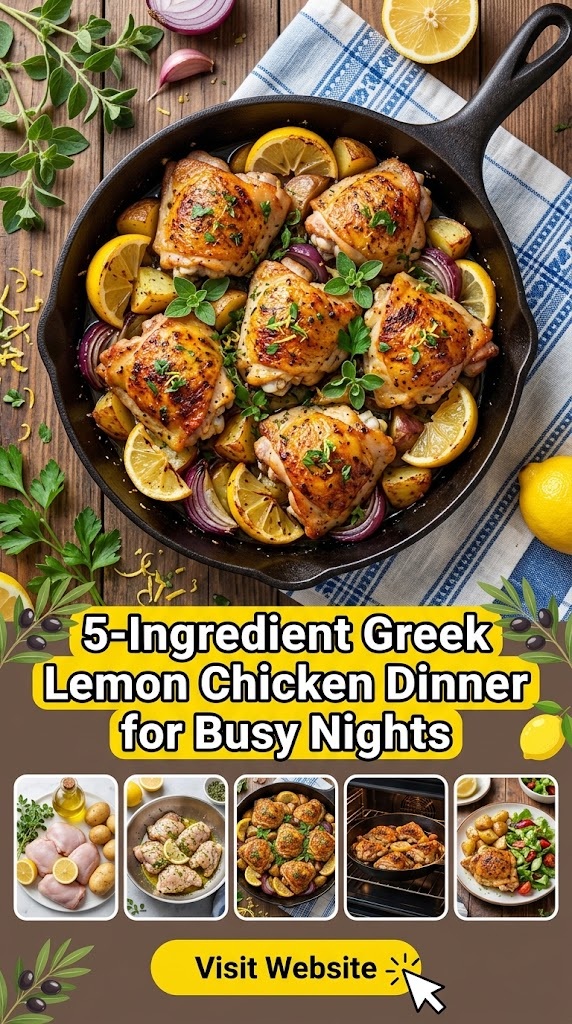

This dish is the antithesis of the stressful weeknight meal. It is a masterclass in simplicity, proving that you don’t need a pantry full of exotic spices to create a five-star dining experience at home. Inspired by the traditional Greek dish Kotopoulo Lemonato, this recipe strips away the noise and focuses on five high-quality components that work in perfect harmony: chicken, lemon, garlic, dried oregano, and extra-virgin olive oil.
In this comprehensive guide, we will explore why this recipe is a game-changer for busy households, the science behind its flavors, the best techniques for achieving crispy skin and juicy meat, and how you can transform these five basic ingredients into a meal that tastes like it came straight from a taverna on the coast of Santorini.
The Philosophy of Five-Ingredient Cooking
Minimalist cooking is an art form. When you limit yourself to just five ingredients (excluding staples like salt and pepper), every single item must earn its place on the plate. In the case of Greek Lemon Chicken, the ingredients are chosen for their ability to provide high impact with low effort.
1. The Power of Synergy
The Mediterranean diet is world-renowned for its health benefits and its reliance on fresh, seasonal ingredients. This chicken dish relies on a culinary synergy where the acidity of the lemon cuts through the richness of the chicken fat, the garlic provides a savory backbone, and the oregano adds an earthy, floral note that ties everything together.
2. Time Management
The primary barrier to home cooking is time. By reducing the ingredient list, you automatically reduce the time spent grocery shopping, prepping, and cleaning. This dish allows you to move from the front door to the dinner table in under 45 minutes, with only about 10 minutes of active work.
3. Cost-Effectiveness
Eating healthy doesn’t have to be expensive. By focusing on a few high-impact ingredients, you can afford to buy organic chicken or higher-quality olive oil, as you aren’t spending money on a dozen different spices that might sit in your cupboard for years.
The Core Ingredients: A Deep Dive
To make the best 5-ingredient Greek Lemon Chicken, you must understand the role each ingredient plays. Since there are so few, quality matters.
1. The Chicken: Thighs vs. Breasts
The foundation of the dish. While you can use any cut, bone-in, skin-on chicken thighs are the gold standard for this recipe.
- Why Thighs? Dark meat is more forgiving; it remains juicy even if slightly overcooked. The bone adds flavor and helps conduct heat evenly, while the skin provides a crispy, golden texture that holds onto the lemon and herb mixture.
- What about Breasts? If you prefer white meat, use bone-in breasts to prevent them from drying out. If using boneless, skinless breasts, you must reduce the cooking time significantly to avoid a rubbery texture.
2. The Lemon: Zest and Juice
Lemon is the star of the show. It provides “brightness”—a culinary term for the way acidity awakens the taste buds and makes other flavors pop.
- Fresh is Non-Negotiable: Never use bottled lemon juice. It lacks the essential oils found in the peel and the vibrant, complex acidity of fresh fruit.
- The Zest: Most of the lemon flavor lives in the zest (the yellow outer layer). Use a microplane to grate the zest into your marinade for an intense citrus punch.
3. Garlic: The Aromatic Backbone
Garlic provides the savory “umami” that makes the chicken craveable.
- Preparation Matters: For this recipe, minced garlic is best as it distributes evenly over the chicken. If you love garlic, don’t be afraid to double what the recipe calls for.
4. Dried Oregano: The Soul of Greece
In many cuisines, fresh herbs are preferred over dried. However, Greek cooking is one of the few places where dried oregano is often superior.
- Flavor Profile: Dried Greek oregano has a more concentrated, peppery flavor that stands up well to high-heat roasting. It infuses the olive oil and creates a delicious crust on the chicken skin.
5. Extra-Virgin Olive Oil (EVOO)
This isn’t just a cooking medium; it’s a flavoring agent.
- The Liquid Gold: Use a high-quality, cold-pressed extra-virgin olive oil. It helps the chicken skin crisp up while carrying the flavors of the garlic and oregano into the meat.
The Recipe: 5-Ingredient Greek Lemon Chicken
This recipe is designed for a standard sheet pan or a large cast-iron skillet. It serves four people.
Ingredients
- Chicken: 2 lbs (approx. 4-6 pieces) of bone-in, skin-on chicken thighs.
- Lemons: 2 large lemons (zested and juiced).
- Garlic: 4-6 cloves, minced.
- Dried Oregano: 2 tablespoons.
- Extra-Virgin Olive Oil: 1/4 cup.
- (Note: Salt and black pepper are considered “free” pantry staples).
Instructions
Step 1: Prep the Chicken
Preheat your oven to 425°F (220°C). Pat the chicken thighs completely dry with paper towels. This is the secret to crispy skin; moisture is the enemy of crunch. Season both sides generously with salt and black pepper.
Step 2: Create the Greek Marinade
In a small bowl, whisk together the olive oil, lemon juice, lemon zest, minced garlic, and dried oregano.
Step 3: Combine and Marinate
Place the chicken in a large bowl or a zip-top bag. Pour the marinade over the chicken, ensuring every piece is thoroughly coated. If you have time, let it sit for 15-30 minutes. If you’re in a rush, you can proceed straight to cooking; the flavors are potent enough to shine immediately.
Step 4: Arrange for Roasting
Place the chicken thighs on a baking sheet or in a cast-iron skillet, skin-side up. Pour any remaining marinade from the bowl over the chicken. For extra flavor, you can slice the squeezed lemon halves and tuck them between the chicken pieces.
Step 5: Roast to Perfection
Slide the pan into the oven and roast for 30–35 minutes. At the 30-minute mark, check the internal temperature with a meat thermometer. You are looking for 165°F (74°C) for food safety, but chicken thighs can handle up to 175°F (80°C) and will be even more tender.
Step 6: The Broil (Optional but Recommended)
If the skin isn’t as golden-brown as you’d like, turn the broiler on for the last 2-3 minutes. Keep a close eye on it to prevent burning!
Step 7: Rest and Serve
Remove the pan from the oven. Let the chicken rest for 5-10 minutes before serving. This allows the juices to redistribute, ensuring the meat is moist. Spoon the pan juices (the “liquid gold”) over the chicken before serving.
Techniques for Success: Pro Tips for Busy Cooks
Even with only five ingredients, technique can make the difference between a “good” meal and a “legendary” one.
Achieving Maximum Crispiness
The skin is the best part of this dish. To ensure it’s perfectly crisp:
- The Drying Method: As mentioned, pat the chicken dry. For even better results, leave the chicken uncovered in the fridge for an hour before cooking to air-dry the skin.
- The Cast Iron Advantage: Using a cast-iron skillet allows for superior heat retention. You can even sear the chicken skin-side down on the stovetop for 3 minutes before flipping and moving the whole skillet to the oven.
Managing Garlic Burn
Garlic can become bitter if it burns. If you find your garlic is charring too quickly in a 425°F oven, try tucking the minced garlic under the chicken skin or mixing it more thoroughly with the oil to shield it from direct heat.
The Role of Salt
Salt does more than season; it breaks down proteins. Salting the chicken at least 20 minutes before cooking (a “dry brine”) allows the salt to penetrate the meat, making it more flavorful and helping it retain moisture during roasting.
Nutritional Benefits: The Healthy Choice
One of the reasons Greek Lemon Chicken is a staple in healthy households is its alignment with the Mediterranean Diet, which is consistently ranked as one of the healthiest eating patterns in the world.
Lean Protein
Chicken thighs provide high-quality protein necessary for muscle repair and satiety. While they contain more fat than breasts, much of it is monounsaturated (the “good” fat), especially when paired with olive oil.
The Power of Vitamin C
Using two whole lemons provides a significant boost of Vitamin C, which supports the immune system and aids in the absorption of iron from the chicken.
Heart-Healthy Fats
Extra-virgin olive oil is rich in antioxidants and oleic acid, which are known to reduce inflammation and support heart health.
Low Carb and Keto-Friendly
Naturally free of grains and sugars, this recipe is perfect for those following a low-carb, ketogenic, or paleo lifestyle. It focuses on whole foods rather than processed fillers.
Variations and Adaptations
While the 5-ingredient version is perfect in its simplicity, you can adapt this recipe based on what you have in your kitchen or your dietary needs.
The “Sheet Pan Meal” Upgrade
If you want a complete meal on one tray, toss some halved baby potatoes and sliced red onions in the same marinade as the chicken. Spread them around the chicken on the sheet pan. The potatoes will soak up the chicken fat and lemon juice, turning into crispy, flavorful morsels.
The Air Fryer Method
For an even faster dinner, use the air fryer.
- Prep the chicken as usual.
- Place in the air fryer basket (skin-side up).
- Cook at 380°F (190°C) for 18–22 minutes, flipping halfway through if desired (though skin-side up for the duration usually yields the best crust).
The Instant Pot Version
If you prefer “fall-off-the-bone” tender meat:
- Sauté the chicken in the Instant Pot with olive oil to brown the skin.
- Remove chicken, add 1/2 cup of chicken broth (or water) to deglaze the bottom.
- Add the lemon juice, garlic, and oregano.
- Place chicken back in on a trivet.
- Pressure cook on High for 10 minutes, with a natural release. Note: You will lose the crispy skin with this method, but the meat will be incredibly succulent.
What to Serve with Greek Lemon Chicken
Since the chicken has a bold, acidic profile, it pairs beautifully with sides that can soak up the juices or provide a cool contrast.
1. Traditional Greek Sides
- Greek Salad (Horiatiki): Feta cheese, kalamata olives, cucumbers, and tomatoes. The saltiness of the feta complements the lemon beautifully.
- Tzatziki: A cool yogurt and cucumber dip that cuts through the heat and spice of the chicken.
- Lemon Rice: Rice cooked with a bit of turmeric and finished with fresh lemon zest.
2. Low-Carb Options
- Roasted Asparagus: Tossed in olive oil and salt, roasted on the same tray as the chicken.
- Cauliflower Rice: Sautéed with a bit of garlic and parsley.
- Sautéed Spinach: Wilted in a pan with the leftover pan juices from the chicken.
3. Starches for the Kids
- Orzo Pasta: This rice-shaped pasta is a Greek favorite. Toss it with a little butter and the drippings from the chicken pan.
- Pita Bread: Warm, fluffy pita is perfect for making mini chicken wraps or soaking up the lemon-garlic oil.
Meal Prep and Storage
This recipe is a meal-prepper’s dream. The flavors actually improve as they sit, making the leftovers just as good (if not better) the next day.
Refrigeration
Store cooked chicken in an airtight container for up to 4 days. To keep the skin from getting soggy, store the pan juices separately and pour them over the chicken right before reheating.
Reheating Tips
To maintain the texture, avoid the microwave if possible. Instead, place the chicken in a toaster oven or air fryer at 350°F for 5–7 minutes until heated through. This will recrisp the skin.
Freezing
You can freeze the raw chicken in the marinade. Place the chicken and the 5-ingredient mixture in a freezer bag, squeeze out the air, and freeze for up to 3 months. When you’re ready to cook, let it thaw in the fridge overnight. It will marinate as it thaws, resulting in incredibly flavorful meat.
Troubleshooting Common Issues
Even the simplest recipes can hit a snag. Here is how to fix common problems:
- The Chicken is Dry: This usually happens with boneless breasts. Next time, use a meat thermometer and pull the chicken out exactly at 165°F. For thighs, make sure they are bone-in, as the bone acts as an insulator.
- The Sauce is Too Sour: Lemons vary in acidity. If the sauce is too sharp, whisk in a teaspoon of honey or a splash of chicken broth to balance the PH.
- The Skin Isn’t Crispy: This is almost always caused by excess moisture. Ensure the chicken is bone-dry before adding oil, and don’t crowd the pan. If the pieces are too close together, they will steam rather than roast.
- The Garlic is Bitter: This means it burned. Next time, chop the garlic into larger chunks rather than mincing it finely, or add the garlic halfway through the cooking process.
The Cultural Connection: A Taste of the Mediterranean
While this is a simplified 5-ingredient version, it honors the tradition of Greek Lemonato cooking. In Greece, “Lemonato” refers to a method of braising or roasting meat (lamb, chicken, or pork) with a generous amount of lemon and oregano.
This style of cooking reflects the Greek landscape—the abundance of citrus groves and the wild oregano that grows across the hillsides. By making this dish, you aren’t just making a “quick dinner”; you are participating in a culinary tradition that emphasizes the purity of ingredients and the joy of simple, shared meals.
In a world where we are often overwhelmed by choice, there is something deeply grounding about returning to the basics. The 5-ingredient Greek Lemon Chicken isn’t just a recipe; it’s a reminder that the best things in life—and on our dinner plates—don’t have to be complicated.
Frequently Asked Questions (FAQs)
Q: Can I use dried basil instead of oregano? A: You can, but it will change the flavor profile significantly. Basil is sweeter and more peppery, whereas oregano has that classic earthy “Greek” taste. If you don’t have oregano, dried thyme or marjoram are better substitutes.
Q: Is this recipe safe for a gluten-free diet? A: Yes! All five ingredients (chicken, lemon, garlic, oregano, olive oil) are naturally gluten-free. Just ensure your dried oregano doesn’t have any cross-contamination additives.
Q: Can I use frozen chicken? A: Yes, but it must be fully thawed before you begin. If you try to roast frozen chicken, the outside will burn before the inside is cooked, and the skin will never get crispy because of the water release.
Q: How do I make this for a large crowd? A: Simply double or triple the ingredients. Use two large sheet pans instead of one. If you put too much chicken on one pan, they will steam. Rotate the pans halfway through cooking (top to bottom rack) to ensure even browning.
Q: Can I use lime instead of lemon? A: While it would still be delicious, it would no longer be “Greek.” Lime would give it a more Southeast Asian or Mexican flair. If you go this route, consider swapping the oregano for cilantro after cooking.
Q: What if I don’t have a meat thermometer? A: You can check the chicken by piercing the thickest part with a knife. If the juices run clear (not pink), it’s done. However, for $15, a digital meat thermometer is the best investment you can make for your kitchen.
Conclusion: Why This Will Become Your New Go-To
The 5-Ingredient Greek Lemon Chicken wins because it checks every box:
- Speed: Minimal prep and fast cooking.
- Flavor: High-impact ingredients that provide a gourmet taste.
- Health: High protein, healthy fats, and no processed junk.
- Affordability: Low-cost ingredients found in any grocery store.
- Versatility: Easy to adapt for different diets and kitchen tools.
Busy nights don’t have to mean compromising on quality. With a few lemons, a splash of oil, and some pantry staples, you can transform a humble pack of chicken into a Mediterranean feast that will have your family asking for seconds. Put down the takeout menu and preheat your oven—the best meal of the week is only five ingredients away.