
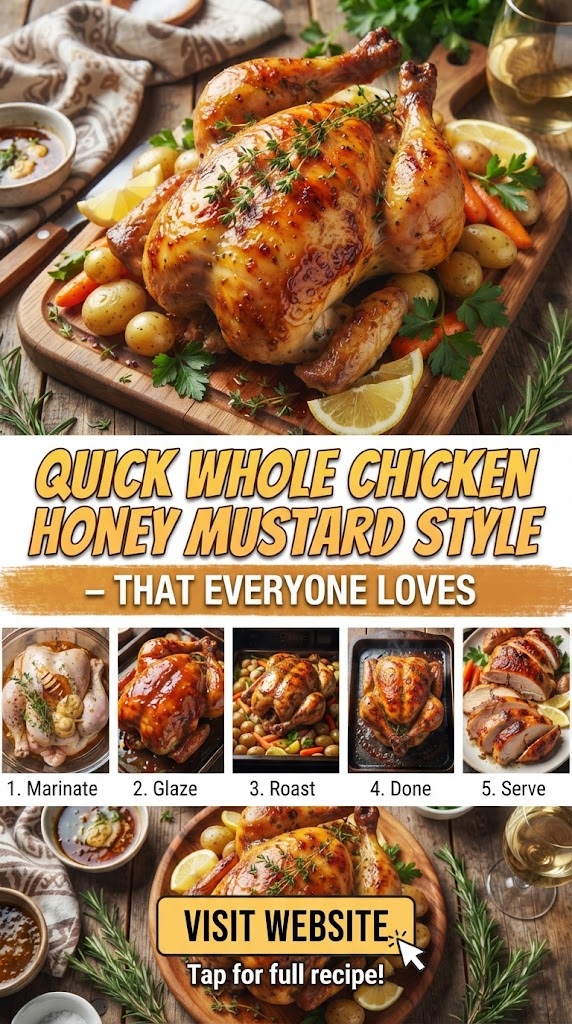

There is something inherently primal and deeply satisfying about a whole roasted chicken sitting at the center of a dinner table. It is the universal symbol of a home-cooked meal, a centerpiece that promises comfort, nourishment, and a touch of culinary mastery. But while a traditional roast is grand, the Quick Whole Chicken Honey Mustard Style elevates this classic to a level of obsession-worthy deliciousness.
In the world of flavors, few pairings are as iconic or as perfectly balanced as honey and mustard. It is a marriage of opposites: the floral, unyielding sweetness of honey meeting the sharp, pungent, and acidic bite of mustard. When applied to a succulent, whole-roasted bird, this duo creates a lacquer-like glaze that caramelizes into a golden-brown crust, locking in juices and infusing every fiber of the meat with a sophisticated tang.
This guide isn’t just a recipe; it is a masterclass in achieving the perfect honey mustard chicken. Whether you are a busy parent looking for a “set it and forget it” Sunday feast or a culinary enthusiast aiming to perfect your roasting technique, this comprehensive deep dive will provide everything you need to know.
Why Honey Mustard Chicken is a Global Crowd-Pleaser
Before we dive into the “how,” let’s talk about the “why.” Why does this specific flavor profile resonate so deeply across cultures?
- The Sweet and Savory Balance: Human palates are biologically wired to enjoy the combination of sugar and salt. The honey provides the sweetness, while the mustard and salt seasoning provide the savory depth. This balance triggers a “moreish” quality that keeps people coming back for seconds.
- Texture Contrast: A well-executed honey mustard glaze creates a tacky, slightly charred skin that contrasts beautifully with the tender, moist meat underneath.
- Versatility: Honey mustard isn’t just one flavor. By adjusting the type of mustard (Dijon, grainy, yellow) or the type of honey (clover, wildflower, manuka), you can completely change the character of the dish.
- Aroma: The smell of honey caramelizing alongside roasting fats is one of the most inviting scents in the culinary world, instantly making a house feel like a home.
Selecting Your Bird: The Foundation of Quality
You cannot produce a five-star meal with a one-star chicken. When shopping for your whole chicken, keep these factors in mind:
1. Size Matters
For a “quick” roast, aim for a chicken between 3.5 to 4.5 pounds. Larger birds take significantly longer to cook and run the risk of the breast meat drying out before the dark meat (thighs and legs) is fully done.
2. Air-Chilled vs. Water-Chilled
If your budget allows, always opt for air-chilled chicken. Most commercial chickens are chilled in cold water baths, which causes them to soak up excess water. This water leaches out during cooking, leading to soggy skin and diluted flavor. Air-chilled birds retain their natural juices and result in much crispier skin.
3. Organic and Free-Range
Organic chickens are raised without antibiotics and fed non-GMO feed. More importantly, birds that have had the room to move around tend to have better muscle structure and a richer, “chicken-y” flavor compared to those raised in confined spaces.
The Secret to Speed: Spatchcocking
The title of this recipe promises a “Quick” chicken. The secret weapon for reducing roasting time by nearly 50% is a technique called spatchcocking (or butterflying).
By removing the backbone and laying the chicken flat, you increase the surface area exposed to the heat. This allows the dark meat and white meat to cook at a more even rate and ensures that every square inch of the skin is exposed to the oven’s convection, resulting in maximum crispiness.
How to Spatchcock Your Chicken:
- Place the chicken breast-side down on a large cutting board.
- Using heavy-duty kitchen shears, cut along one side of the backbone from the tail to the neck.
- Repeat on the other side of the backbone and remove it (save the bone for stock!).
- Flip the chicken over and press down firmly on the breastbone with the palm of your hand until you hear a crack and the bird lies flat.
The Ultimate Honey Mustard Glaze: Ingredient Deep Dive
A great glaze is more than just mixing two ingredients. It’s about the layers of flavor.
The Mustard Components
- Dijon Mustard: This is the backbone. It provides a sophisticated, sharp heat and acts as an emulsifier to keep the glaze smooth.
- Whole Grain Mustard: Adding a tablespoon of grainy mustard provides texture and “pops” of flavor that look beautiful on the finished bird.
The Sweeteners
- Raw Honey: Use a good quality honey. Wildflower honey offers a complex floral note, while Clover honey is more neutral.
- Optional: A touch of Brown Sugar: Adding a teaspoon of brown sugar helps with the Maillard reaction (browning), giving the skin that deep mahogany color.
The Aromatics and Acid
- Garlic: Freshly minced garlic is non-negotiable. It mellows as it roasts, becoming sweet and savory.
- Apple Cider Vinegar: A splash of acidity cuts through the heaviness of the honey and chicken fat, brightening the entire dish.
- Smoked Paprika: This adds a hint of woodsy smoke and a gorgeous red hue.
- Fresh Thyme or Rosemary: Woody herbs pair exceptionally well with honey and mustard.
Ingredients List
- 1 Whole Chicken (approx. 4 lbs)
- The Rub:
- 2 tbsp Olive oil or melted butter
- 1 tbsp Kosher salt
- 1 tsp Cracked black pepper
- 1 tsp Garlic powder
- The Honey Mustard Glaze:
- 1/3 cup Dijon mustard
- 1/4 cup Honey
- 1 tbsp Whole grain mustard
- 2 cloves Garlic, minced
- 1 tbsp Apple cider vinegar
- 1/2 tsp Smoked paprika
- 1 tsp Fresh thyme leaves
Step-by-Step Cooking Instructions
Step 1: Preparation and Drying
The enemy of crispy skin is moisture. Remove your chicken from the fridge 30 minutes before cooking to take the chill off. Pat it bone-dry with paper towels—inside and out. If you have time, let it sit uncovered in the fridge for 2 hours for even better results.
Step 2: Seasoning
Preheat your oven to 425°F (218°C). High heat is essential for a quick roast. Coat the bird lightly with olive oil or butter, then season generously with salt, pepper, and garlic powder. Do this before adding the honey mustard glaze, as the salt needs to penetrate the skin.
Step 3: The Initial Roast
If spatchcocked, place the chicken on a wire rack set over a rimmed baking sheet. If roasting whole, place it in a heavy cast-iron skillet or roasting pan. Roast the chicken for 20 minutes without the glaze. This allows the fat to begin rendering and the skin to start crisping before the sugars in the honey are introduced (which can burn if left too long).
Step 4: Glazing
Whisk all glaze ingredients together. After the initial 20 minutes, remove the chicken and brush a generous layer of the honey mustard mixture over the entire surface.
Step 5: The Final Stretch
Return the chicken to the oven. Reduce the heat to 400°F (200°C). Roast for another 20–30 minutes (depending on size). Every 10 minutes, apply another layer of glaze.
Step 6: Testing for Doneness
The only way to ensure a perfect chicken is with an instant-read thermometer. Insert it into the thickest part of the thigh (without hitting bone). You are looking for 165°F (74°C). The breast should be around 160°F (it will rise to 165°F while resting).
Step 7: The Crucial Rest
Do not cut the chicken immediately! Transfer it to a carving board and let it rest for at least 15 minutes. This allows the juices to redistribute. If you cut it too soon, all that delicious moisture will run out onto the board, leaving you with dry meat.
Mastery Tips for the Perfect Roast
1. The Cast Iron Advantage
Roasting your chicken in a preheated cast-iron skillet is a game-changer. The heavy metal retains heat and sears the bottom of the chicken, ensuring the dark meat cooks efficiently and the skin on the underside doesn’t become soggy.
2. Don’t Over-Glaze Early
Honey has a high sugar content. If you apply the glaze from the very beginning of a hour-long roast, the sugars will burn and turn bitter before the chicken is cooked through. Always wait until the final 20–30 minutes.
3. Use the Pan Drippings
The liquid at the bottom of your roasting pan is liquid gold. It contains chicken fat (schmaltz), rendered honey, and mustard. Whisk in a little chicken stock or white wine, simmer it in a pan, and you have an instant, high-intensity sauce to pour over the carved meat.
Flavor Variations to Try
While the classic recipe is a winner, you can adapt this “Honey Mustard Style” to suit different palates:
- Spicy Honey Mustard: Add a tablespoon of Sriracha or a teaspoon of cayenne pepper to the glaze for a “Hot Honey” vibe.
- Maple Mustard: Swap the honey for real grade-A maple syrup for a deeper, woodier sweetness—perfect for autumn.
- Lemon Herb Honey Mustard: Add the zest of one lemon and a handful of chopped parsley and chives for a brighter, fresher profile.
- Garlic Bomb: Double the garlic and use roasted garlic paste in the glaze for a mellow, caramelized garlic flavor.
Perfect Side Dish Pairings
A whole chicken is a meal’s protagonist, but every hero needs a supporting cast. Here are the best pairings for Honey Mustard Chicken:
1. Roasted Root Vegetables
Since the oven is already on, toss carrots, parsnips, and baby potatoes in olive oil and herbs. Place them in the pan around the chicken. They will roast in the chicken fat and honey glaze drippings, creating the best vegetables you’ve ever tasted.
2. Garlic Mashed Potatoes
The creamy texture of mashed potatoes is the perfect vessel for soaking up the honey mustard sauce. Add plenty of butter and roasted garlic to keep the flavors consistent.
3. A Crisp Green Salad
Because the chicken is rich and sweet, a bright salad with a light vinaigrette helps cleanse the palate. Try an arugula salad with shaved parmesan and a lemon-lemon dressing.
4. Sautéed Green Beans with Almonds
The crunch of toasted almonds and the snap of fresh green beans provide a textural contrast to the tender chicken.
What to Do with Leftovers?
If you are lucky enough to have leftovers, honey mustard chicken is the gift that keeps on giving.
- The Ultimate Chicken Salad: Shred the cold meat and mix it with a little mayo, extra Dijon, diced celery, and grapes.
- Honey Mustard Chicken Wraps: Use sliced breast meat, spinach, avocado, and a drizzle of extra honey mustard in a flour tortilla.
- Protein-Packed Grain Bowls: Serve shredded chicken over quinoa with roasted sweet potatoes and a tahini-mustard dressing.
- Chicken Soup with a Twist: Use the carcass to make a stock. The hint of honey and mustard in the bones adds a unique depth to a standard chicken noodle soup.
The Nutritional Profile
Chicken is one of the leanest and most versatile proteins available. A whole chicken provides a balance of white meat (lower in fat) and dark meat (richer in iron and B vitamins).
- Protein: Essential for muscle repair and growth.
- Selenium: A powerful antioxidant that supports heart health and immunity.
- Phosphorus: Supports healthy teeth and bones.
- Honey Benefits: While sugar-dense, honey contains antioxidants and can be a better alternative to refined sugars.
- Mustard Benefits: Mustard seeds contain glucosinolates, which have been studied for their anti-inflammatory properties.
Troubleshooting Common Issues
Why is my chicken skin rubbery?
This usually happens because of moisture. Ensure the bird is patted bone-dry before roasting. Additionally, if the oven temperature is too low, the fat won’t render properly. Stick to 400°F-425°F.
Why is the breast meat dry?
Breast meat cooks faster than thighs. By spatchcocking the bird, you help mitigate this. Also, ensure you are taking the bird out when the breast reaches 160°F—it will reach the safe 165°F via carry-over cooking.
The glaze is burning!
If the honey is browning too quickly, tent the chicken loosely with aluminum foil. This allows the meat to continue cooking without the direct heat further scorching the sugars.
The Art of Carving
Carving a whole chicken can be intimidating, but it’s simple once you know the anatomy:
- Remove the Legs: Pull the leg away from the body and cut through the skin and joint connecting the thigh to the body.
- Separate Thigh and Drumstick: Find the joint between the two and slice through.
- Remove the Wings: Cut through the joint where the wing meets the breast.
- Slicing the Breast: Cut down along one side of the breastbone, then use long strokes to follow the ribcage until the entire breast half comes away. Slice into thick strips against the grain.
Frequently Asked Questions (FAQs)
Can I use frozen chicken?
Yes, but it must be completely thawed in the refrigerator (usually 24 hours) before cooking. Roasting a partially frozen chicken will result in uneven cooking and potentially unsafe internal temperatures.
Can I make this in an Air Fryer?
Absolutely! An air fryer is essentially a high-powered convection oven. For a whole chicken, ensure it fits in your basket. Air fry at 360°F for about 45-55 minutes, applying the glaze in the last 10 minutes.
What can I substitute for honey?
Maple syrup, agave nectar, or even apricot preserves work wonderfully as substitutes. Each will provide a slightly different flavor profile but the same sweet-savory effect.
Is Dijon mustard necessary?
Dijon provides a specific “zip” that yellow mustard lacks. However, if you only have yellow mustard, you can use it, but add a teaspoon of white wine vinegar to mimic the Dijon acidity.
The Cultural Significance of the Sunday Roast
In the United States and across Europe, the “Sunday Roast” is more than just a meal; it is a ritual. It marks the end of the week and a time for family to gather. The Quick Whole Chicken Honey Mustard Style fits perfectly into this tradition because it feels celebratory without requiring hours of labor. It allows the cook to spend more time with their guests and less time hovering over the stove.
As the honey mustard glaze caramelizes in the oven, it creates a “sticky-finger” experience that is informal, joyous, and universally loved. It’s a dish that appeals to the nostalgia of childhood (who didn’t love honey mustard dipping sauce?) while satisfying the refined palate of an adult.
Final Thoughts: Bringing it All Together
Cooking a whole chicken is a rite of passage for any home cook. It teaches you about heat management, seasoning, and timing. By adding the honey mustard element, you are taking those fundamental skills and applying a layer of flavor that is guaranteed to impress.
The key takeaways for success are:
- Dry the skin thoroughly.
- Spatchcock for speed and even cooking.
- Glaze late to avoid burning.
- Rest the meat to retain juices.
Whether it’s a Tuesday night dinner or a special occasion, this Quick Whole Chicken Honey Mustard Style is a recipe you will find yourself returning to again and again. It is reliable, vibrant, and—most importantly—it is the dish that everyone loves.
Kitchen Equipment Checklist:
To make this recipe flawlessly, ensure you have:
- A sharp pair of kitchen shears (for spatchcocking).
- A meat thermometer (the most important tool in your kitchen).
- A sturdy roasting pan or cast-iron skillet.
- A silicone pastry brush (for even glazing).
Now, head to your local butcher, grab the best bird you can find, and get ready to create a meal that will have your family asking for the recipe. The beauty of the honey mustard chicken lies in its simplicity and its power to bring people together around the table. Happy roasting!
Detailed Recipe Summary Table
| Step | Action | Temperature | Duration |
|---|---|---|---|
| Prep | Spatchcock, dry, and season | Room Temp | 15 mins |
| Initial Roast | Place in oven (no glaze) | 425°F | 20 mins |
| Glaze 1 | Apply honey mustard mixture | 400°F | 10 mins |
| Glaze 2 | Apply second layer | 400°F | 10-15 mins |
| Check | Internal temp 165°F | N/A | Until done |
| Rest | Tent with foil on board | Room Temp | 15 mins |
Expanded Beverage Pairing Guide
To truly complete the experience, choosing the right beverage can elevate the flavors of the honey and mustard.
Wine Pairings:
- Chardonnay: Look for an oaked Chardonnay. The buttery notes of the wine complement the honey, while the acidity cuts through the mustard.
- Riesling: An off-dry Riesling is a classic match for honey mustard. Its natural sweetness mirrors the glaze, while its high acidity balances the fat of the chicken.
- Pinot Noir: If you prefer red, Pinot Noir is light enough not to overpower the chicken but has enough earthiness to stand up to the mustard.
Beer Pairings:
- Saison / Farmhouse Ale: These beers often have spicy, fruity notes that play beautifully with the aromatics in the glaze.
- Hazy IPA: The tropical fruit notes of a New England style IPA can provide a refreshing contrast to the savory-sweet chicken.
Non-Alcoholic Pairings:
- Sparkling Apple Cider: The crisp apple flavor is a natural friend to both honey and pork/poultry.
- Iced Tea with Lemon: The tannins in the tea and the acid of the lemon provide a clean finish after every rich bite.
The Science of Flavor: The Maillard Reaction and Caramelization
Why does this chicken look so good? Two scientific processes are at work:
- The Maillard Reaction: This is the chemical reaction between amino acids and reducing sugars that gives browned food its distinctive flavor. Because chicken skin is high in protein and the glaze provides the sugars, this reaction is supercharged in this recipe.
- Caramelization: This is the pyrolysis of sugar. As the honey reaches high temperatures, the sugar molecules break down and create new compounds with a deep, nutty flavor and a dark brown color.
By understanding these processes, you realize why the high heat of the oven is so important. Without sufficient heat, you don’t get the reaction; without the reaction, you don’t get the flavor.
Conclusion
The Quick Whole Chicken Honey Mustard Style is more than just a meal—it is a culinary triumph that fits into any lifestyle. It proves that you don’t need a massive list of exotic ingredients to create something world-class. With a few pantry staples, a good quality bird, and the right technique, you can produce a dinner that is restaurant-quality in your very own kitchen.
Invite your friends, set the table, and enjoy the symphony of flavors that only honey, mustard, and a perfectly roasted chicken can provide. This is, without a doubt, the chicken recipe that everyone loves.