
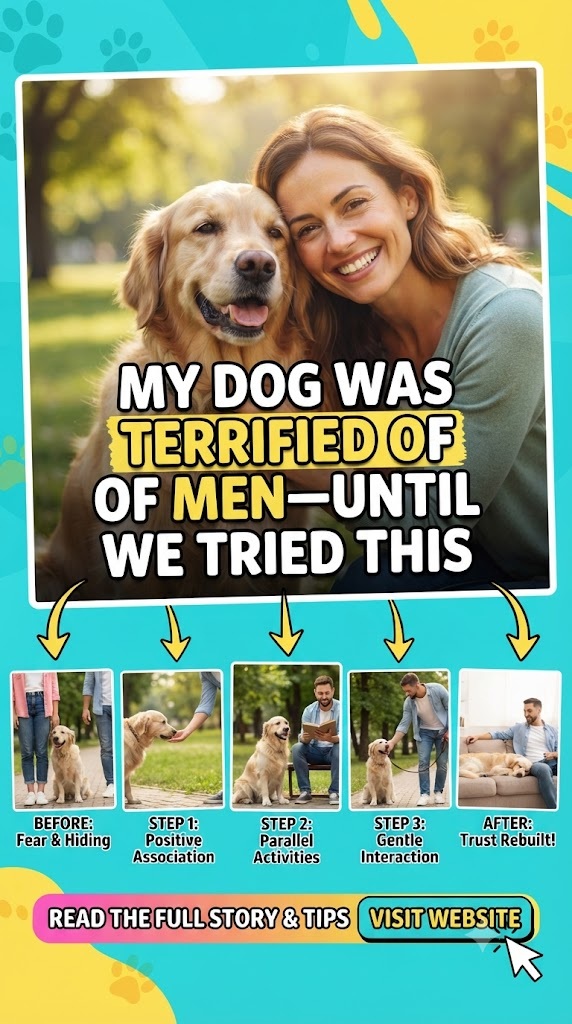

My Dog Hates Men: The Ultimate Guide to the 7-Step Plan That Actually Fixed It
It’s a scene many dog owners know all too well. You’re walking your perfectly sweet, cuddly Labrador or your tiny, pint-sized Terrier, and everything is fine—until a man walks by. Suddenly, your dog transforms. The hair on their back stands up, a low rumble starts in their chest, and before you can apologize, they are lunging, barking, or hiding behind your legs in a state of sheer terror.
“My dog hates men.” It’s a phrase uttered by thousands of frustrated owners every day. It feels embarrassing, it makes hosting guests a nightmare, and it leaves you wondering if your dog was secretly abused before they came to you.
But here’s the truth: most dogs don’t “hate” men because of a dark, traumatic past. They fear them because of biology, psychology, and a lack of proper communication. I spent years navigating this with my own rescue dog, and after countless tears and “I’m so sorry” shrugs to neighbors, I finally found the system that works.
This isn’t just about “getting your dog used to guys.” This is about a complete neurological shift. Here is the comprehensive, science-backed guide on why your dog is reacting this way and the exact steps I took to fix it.
Part 1: The Psychology—Why Do Dogs Single Out Men?
Before you can fix the behavior, you have to understand the “why.” If you think your dog is just being “mean,” you will approach the training with frustration. If you understand they are terrified, you will approach it with empathy.
1. The Physicality of Men
To a dog, men are objectively more “intimidating” than women or children.
- Deep Voices: Lower frequencies in nature often signal a threat or a larger predator.
- Size and Stature: Men tend to be taller, have broader shoulders, and take up more physical space.
- Facial Hair: Beards and mustaches can obscure a human’s facial expressions, making it harder for a dog to “read” if the person is friendly.
- Heavy Footsteps: Men often walk with a heavier heel-strike, which creates vibrations and sounds that can trigger a dog’s “startle” reflex.
2. The Socialization Gap
There is a critical window in a puppy’s life (between 3 and 16 weeks) where they learn what is “safe” in the world. If a puppy was raised primarily by a female breeder or a single woman and didn’t have positive, varied interactions with men during this window, they may grow up viewing men as a “different species” entirely.
3. The “Staring” Problem
In the human world, making eye contact is polite. In the dog world, a direct, prolonged stare is a challenge or a threat. Men, often trying to be “alpha” or simply curious, tend to look directly at dogs. To a fearful dog, this feels like an impending attack.
Part 2: The “What NOT To Do” List (Common Mistakes)
When I first started trying to fix my dog’s fear, I did everything wrong. Most people do. Here are the three biggest mistakes that actually make the problem worse:
1. Forcing the Interaction
“Just let him sniff your hand!” This is the worst advice ever given to dog owners. If a dog is afraid, forcing them to move toward the “scary thing” puts them in a “fight or flight” deadlock. If they can’t flee (because they are on a leash), they will eventually choose to fight.
2. Punishing the Growl
A growl is a dog’s way of saying, “I am uncomfortable, please stay back.” If you scold or pop the collar when your dog growls at a man, you aren’t fixing the fear; you are just removing the warning system. Next time, the dog might skip the growl and go straight for a bite because they’ve learned that growling gets them in trouble.
3. Using the “Alpha” Approach
Pinning your dog to the ground or “dominating” them to show them who is boss will only confirm their suspicion that the world is a scary, violent place. It destroys the bond of trust between you and your pet.
Part 3: The 7-Step Plan That Actually Fixed It
This is the core of the transformation. It requires patience, consistency, and a lot of high-quality treats. We aren’t looking for a “quick fix” that lasts a week; we are looking for a permanent brain rewire.
Step 1: Establish a “Safe Zone” Management Plan
Before you start training, you must stop the “rehearsal” of the bad behavior. Every time your dog lunges at a man, that neural pathway gets stronger.
- At Home: Use baby gates to keep your dog in a separate room when male guests arrive.
- On Walks: Walk during “off-peak” hours or in areas where you have plenty of space to move away from men.
- The “Yellow Ribbon”: Attach a yellow ribbon or a “Give Me Space” patch to your dog’s leash to signal to strangers not to approach.
Step 2: The “Look at That” (LAT) Game
This is a classic Leslie McDevitt technique. The goal is to teach your dog that seeing a man is a cue to look at you for a reward.
- Find a distance where your dog can see a man but isn’t barking (this is called the “threshold”).
- The moment your dog notices the man, click (if using a clicker) or say “Yes!” and give a high-value treat (chicken, cheese, hot dogs).
- The dog will start to associate: Man = Cheese.
- Eventually, your dog will see a man and immediately turn to look at you, expecting a treat. This is the first sign of progress!
Step 3: Mastering the “Treat-Retreat” Method
Created by Suzanne Clothier, this is the gold standard for shy dogs. Instead of having a man hand a treat to the dog (which forces the dog to move toward the fear), the man should toss the treat behind the dog.
- Why it works: It rewards the dog for being in the presence of a man while simultaneously giving them a “way out” to move further away to get the treat. This relieves the pressure and allows the dog to approach at their own pace.
Step 4: Scent Desensitization
Dogs live through their noses. You can start “introducing” men without a man even being present.
- Ask a male friend for an old, unwashed t-shirt.
- Place the shirt on the floor at home.
- Place high-value treats all over the shirt.
- Your dog begins to associate the “man scent” with something wonderful.
Step 5: The “Drive-By” Introduction
Once your dog is comfortable seeing men from a distance, it’s time for controlled, non-interactive proximity.
- Have a male friend walk past you at a distance of 20 feet. He should not look at the dog, talk to the dog, or even slow down.
- As he passes, you “shower” the dog with treats.
- The goal is for the dog to realize that men can exist in their space without demanding anything from them.
Step 6: Training the Men in Your Life
Often, the problem isn’t the dog—it’s the humans. I had to give my husband and male friends a “Manual for My Dog.”
- No Eye Contact: Look at the dog’s feet or tail, never the eyes.
- The Side-Profile: Standing sideways makes a man look much smaller and less threatening than standing chest-forward.
- Keep Your Hands to Yourself: Do not reach over the dog’s head to pet them. This is extremely threatening to a fearful dog.
- Lower the Volume: Use a “soft” voice or simply don’t speak to the dog at all initially.
Step 7: The Graduation—Controlled Socialization
After weeks or months of the above, you can move to “Parallel Walking.”
- You and your dog walk on one side of the street; a male friend walks on the other side.
- Gradually decrease the distance between you as long as the dog remains calm.
- Walking together in the same direction is much less stressful for a dog than a “face-to-face” meeting.
Part 4: High-Value Rewards—The “Hierarchy of Treats”
When you are dealing with a deep-seated fear, a dry biscuit won’t cut it. You are asking your dog to face their greatest fear; you have to pay them accordingly. Use “The Good Stuff”:
- Level 1 (Low Stress): Kibble or standard dog treats.
- Level 2 (Medium Stress): Dehydrated liver or jerky.
- Level 3 (High Stress/Proximity to Men): Boiled chicken, string cheese, plain hot dogs, or squeeze-tube peanut butter.
Pro Tip: Only give the “Level 3” treats when men are around. Your dog should think, “I only get my favorite steak when that guy is here… I kind of hope he stays!”
Part 5: Essential Tools for Managing a Dog Who Fears Men
While training is the priority, the right gear makes the process safer and less stressful for everyone involved.
1. The Front-Clip Harness
A traditional collar puts pressure on the throat, which can increase a dog’s anxiety when they are already stressed. A front-clip harness (like the Easy Walk or Blue-9) gives you more control over their body without causing pain.
2. The Muzzle (Destigmatizing the Tool)
If your dog has a history of snapping or biting, a muzzle is a responsible tool, not a sign of a “bad dog.” A basket muzzle allows the dog to pant, drink, and take treats while ensuring everyone’s safety. Muzzle training should be done slowly with lots of peanut butter so the dog loves wearing it.
3. Long Leashes
For “Treat-Retreat” sessions in a park, a 10-foot or 15-foot leash allows the dog to feel they have the freedom to move away, which lowers their overall stress levels.
Part 6: When to Call a Professional
I am a firm believer that many owners can fix this at home with the right information, but there are times when you need a professional.
- If your dog has caused a “Level 3” bite or higher (punctured skin).
- If you feel afraid of your own dog’s reactions.
- If the dog’s fear is “generalized” (they are afraid of everything, not just men).
Look for a trainer with CPDT-KA or IAABC certifications. Avoid anyone who uses terms like “dominance,” “pack leader,” or uses shock collars (e-collars) for fear-based aggression. This will almost certainly backfire.
Part 7: Understanding the Timeline—The “Click” Moment
One of the most common questions is: “How long will this take?”
The answer depends on the dog, but generally, you will see a “softening” in 2-4 weeks. However, the “click” moment—where the dog voluntarily approaches a man with a wagging tail—usually takes 3-6 months of consistent work.
There will be setbacks. You might have a great week and then a man in a floppy hat surprises your dog, causing a “meltdown.” That’s okay. Recovery isn’t a straight line; it’s a zig-zag that trends upward.
Part 8: The “Man-Hating” Dog Survival Guide (For Guests)
Hosting Thanksgiving or a dinner party when your dog is afraid of men can be a logistical nightmare. Here is the protocol I used to keep my dog (and my guests) happy:
- The Pre-Arrival Exercise: Tire the dog out with a long walk or a mental “sniffing” session before guests arrive. A tired dog is a less reactive dog.
- The “ignore the dog” rule: Every male guest is told, “Do not look at, talk to, or touch the dog. If she comes near you, ignore her like she’s a piece of furniture.”
- The “Lick Mat” distraction: Give your dog a frozen lick mat (spread with yogurt or peanut butter) in their safe zone or crate while guests are settling in. Licking is a self-soothing behavior for dogs.
- Short Bursts of Exposure: Let the dog out for 10 minutes of “treat-retreating” with the guests, then put them back in their safe zone before they get overwhelmed.
Final Thoughts: It’s Not About “Curing,” It’s About “Coping”
Today, my dog doesn’t “hate” men. He actually has several “boyfriends” (male friends he gets excited to see). However, he still gets wary of men in big hats or men carrying loud equipment.
The goal isn’t to make your dog love every man on earth—many humans don’t even like every person they meet! The goal is to give your dog the tools to feel safe and the confidence to look to you for guidance when they feel unsure.
If you stay consistent, stay positive, and never force your dog into a situation they aren’t ready for, you will see that transformation. It’s a long road, but seeing your dog finally relax on a walk or settle at the feet of a male friend is worth every single piece of string cheese.
You’ve got this. Your dog isn’t “broken”—they’re just waiting for you to show them the way.