
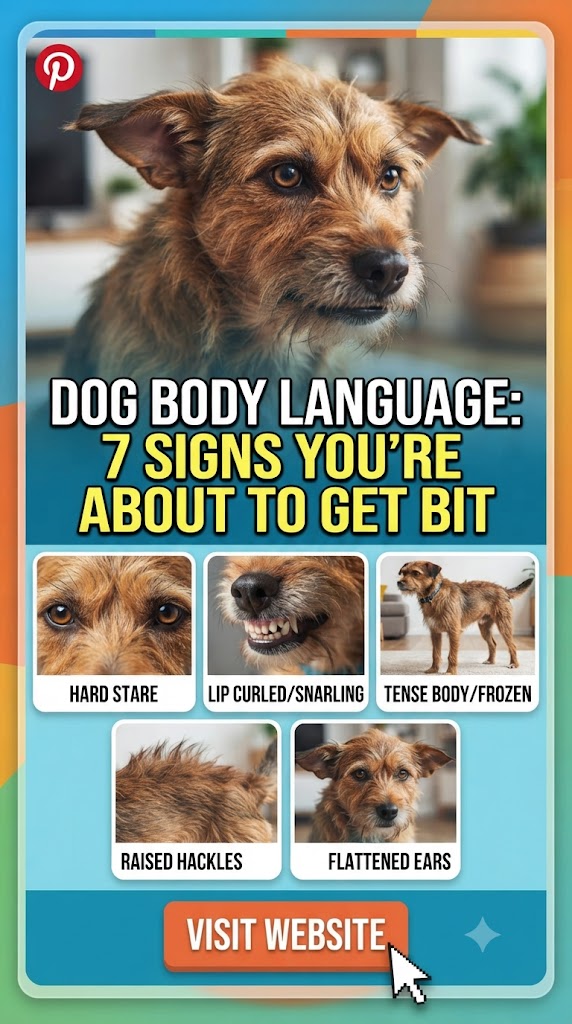

Dog Body Language: 7 Signs You’re About to Get Bit
“He bit me out of nowhere!”
It is the most common phrase heard by veterinarians, dog trainers, and emergency room doctors. But here is the professional truth: dogs almost never bite out of nowhere. To a human, the snap seems like a sudden explosion. To the dog, it was the final, desperate climax of a conversation they’ve been trying to have with you for several minutes—or even several hours.
Dogs communicate primarily through a sophisticated system of silent body language. While humans rely on verbal communication, dogs use a “ladder of aggression” to signal their discomfort. When we ignore the lower rungs of that ladder, the dog feels they have no choice but to climb to the top: the bite.
Understanding dog body language isn’t just for professionals; it is a vital life skill for every pet owner, parent, and animal lover. In this comprehensive guide, we will break down the seven most critical signs that a dog is pushed to its limit and how you can intervene before teeth meet skin.
1. The “Freeze”: The Calm Before the Storm
The most dangerous sign a dog can give you is often the one people find the most confusing: total stillness.
When a dog is happy and relaxed, their body is “loosey-goosey.” Their muscles are fluid, their tail wags with a soft rhythm, and their mouth might be slightly open. However, when a dog perceives a threat or reaches a level of extreme discomfort, they may suddenly go completely rigid.
Why It Happens
This is the “freeze” part of the fight-or-flight response. The dog is hyper-focusing on the perceived threat. They are processing whether they need to flee or defend themselves. If you are petting a dog and they suddenly stop moving and go stiff, stop immediately.
What to Look For:
- The Pause: The dog stops panting abruptly.
- Muscular Tension: You can see the muscles in their shoulders or haunches bunch up.
- Holding Breath: The chest stops moving rhythmically.
The Danger Zone: Many people mistake the freeze for “being good” or “taking it.” If a child is hugging a dog and the dog goes still, parents often think the dog is being patient. In reality, that dog is a ticking time bomb.
2. The “Whale Eye”: A Signal of High Stress
“Whale eye” is a term used by dog behaviorists to describe a situation where a dog shows the whites of their eyes (the sclera).
Under normal circumstances, you shouldn’t see much of the white of a dog’s eye. When a dog is stressed, they often keep their head pointed in one direction but track a “threat” with their eyes. This causes the eye to shift, revealing a white, crescent-moon shape.
Context Matters
Whale eye is most frequently seen during resource guarding. If a dog is chewing a bone and you approach, they may keep their head down over the bone but look up at you with their eyes, revealing the whites.
What to Look For:
- A wide-eyed, “startled” look.
- The dog’s head is turned slightly away from you, but their gaze is fixed on you.
- Dilated pupils (the black part of the eye becomes very large).
If you see whale eye, the dog is telling you they feel cornered or protective. Back away and give them space.
3. Displacement Behaviors: Yawning and Lip Licking
Imagine you are in a high-pressure job interview and you start tapping your pen or adjusting your tie. These are “displacement behaviors”—things we do to soothe our own anxiety. Dogs do the exact same thing.
When a dog is uncomfortable, they often perform behaviors that seem out of context. The two most common are yawning and lip licking.
The Yawn
A stress yawn is different from a “just woke up” yawn. It is often wider, more intense, and may be accompanied by a high-pitched whine or a “shriek.”
The Lip Lick
If a dog hasn’t just eaten or seen a treat, but they are flicking their tongue out to lick their nose or the corners of their mouth, they are signaling internal conflict. They are trying to calm themselves down or signal to you that they are not a threat and want you to back off.
Why People Miss It:
People miss these signs because they look “cute” or “normal.” A dog yawning while a toddler climbs on them is often interpreted as the dog being “sleepy.” In reality, the dog is screaming for help in the only way they know how.
4. The Tail “Tale”: Why a Wag Isn’t Always Friendly
Perhaps the biggest myth in the world of dog behavior is that a wagging tail equals a happy dog. This misconception is responsible for more bites than almost any other factor.
A wagging tail simply means the dog is emotionally aroused. It could be happy excitement, but it could also be frustration, agitation, or preparation for an attack.
How to Read the Tail:
- The “Flagpole” Wag: If the tail is held high, stiff, and vibrates back and forth quickly, this is a high-arousal warning. The dog is “flagging.”
- The Low Tuck: A tail tucked between the legs indicates extreme fear. A fearful dog is a dangerous dog; if they feel they cannot run away, they will bite to protect themselves.
- The Slow, Stiff Wag: If the tail is moving slowly and the rest of the body is rigid, the dog is undecided and wary.
Rule of Thumb: Look at the base of the tail. If the base of the tail and the hips are swaying loosely, the dog is likely happy. If only the tip is moving or the movement is stiff and mechanical, proceed with extreme caution.
5. The “Hard Stare” and Furrowed Brow
In the canine world, direct eye contact is a challenge. While many pets are socialized to look at their owners for cues, a “hard stare” from an unfamiliar dog—or even a stressed pet—is a clear threat.
The Anatomy of a Stare
A “soft” gaze involves squinty eyes and a relaxed face. A “hard” stare involves:
- Round, Unblinking Eyes: The dog fixates on you and refuses to break eye contact.
- The Furrowed Brow: The skin on the forehead bunches up, creating a “serious” or worried expression.
- Forward-Leaning Ears: The ears are pinned forward, focusing all their sensory input on you.
What It Means
The dog is “locking on” to a target. If you encounter a dog doing this, do not stare back (which is a challenge). Instead, look slightly away, turn your body to the side (a calming signal), and slowly increase the distance between you and the dog.
6. The Muzzle Punch or Nose Nudge
This is a subtle physical warning that often precedes a bite by only seconds. A “muzzle punch” is when a dog literally punches you with their nose without opening their mouth.
The Escalation
It often happens when someone is leaning over a dog or invading their personal space. The dog will quickly jab their nose into the person’s hand, face, or leg. It’s a physical “Back off!”
If the person doesn’t move, the dog’s next move is usually a “snap”—a bite where they purposefully miss or just graze the skin—to show they are serious. If that is ignored, the full bite follows.
Look For:
- Quick, darting movements of the head toward your limbs.
- A “closed-mouth” strike.
- Tension in the muzzle area (whiskers may even point forward).
7. The Low Growl and Lip Curl
This is the most obvious sign, yet it is the one people most frequently “punish” out of a dog.
When a dog curls their lip (showing their canines) or lets out a low, guttural growl, they are giving you a final verbal warning. They are saying, “I have tried to tell you I’m uncomfortable with my eyes, my body, and my tail. Now I am using my voice. If you don’t stop, I will use my teeth.”
The Danger of “Punishing the Growl”
Many owners scold their dogs for growling, fearing it makes them “aggressive.” This is a catastrophic mistake. If you punish a dog for growling, you aren’t fixing the dog’s desire to bite; you are simply removing the dog’s alarm system.
Dogs that have been punished for growling will eventually learn to skip the warning and go straight to the bite. These are the dogs that truly seem to “bite out of nowhere.”
What to Do:
If a dog growls, thank them for the warning. Stop whatever you are doing. Evaluate what caused the stress (Are you touching their paws? Are you too close to their food?) and address the underlying fear or discomfort through positive reinforcement training later—not by scolding the warning signal now.
Understanding “Trigger Stacking”: Why Good Dogs Snap
To understand why a dog might display these signs, we must understand Trigger Stacking.
A dog might be fine with a bath. They might also be fine with a loud thunderstorm. They might even be fine with a toddler crawling nearby. But if you put the dog in a bath during a thunderstorm while a toddler is screaming nearby, the “stack” of stressors becomes too much to bear.
Every dog has a threshold. Signs 1 through 7 are the indicators that the dog is approaching or has crossed that threshold. When multiple stressors happen at once, the dog’s ability to “tolerate” behavior diminishes rapidly.
How to De-escalate a Potential Bite Situation
If you recognize these signs in a dog—whether it’s your own pet or a dog you’ve just met—the way you react can determine whether you get bitten.
1. The “Be a Tree” Method
If a dog is charging or showing extreme aggression, do not run. Running triggers a dog’s predatory drive (the “chase”). Instead:
- Stand still.
- Fold your arms.
- Look at your feet.
- Stay calm.
2. Side-Turning
In dog language, a front-facing approach is confrontational. If a dog seems nervous, turn your body to the side. This makes you appear smaller and less threatening.
3. The 3-Second Rule (The Consent Test)
When petting a dog, pet them for three seconds, then stop and move your hand back.
- If the dog nudges you or leans in, they want more.
- If the dog stays still, looks away, or licks their lips, they’ve had enough.
This simple test gives the dog a “choice,” which drastically reduces stress.
Children and Dogs: A Critical Warning
Statistics show that the majority of dog bites involve children, and most of those bites occur from a “known” family dog.
Children are unpredictable. They move quickly, make high-pitched noises, and often don’t understand personal space—all things that dogs find threatening. Furthermore, children are at eye-level with dogs, making direct eye contact more likely.
The “Cute” Photo Trap: Social media is full of photos of children hugging dogs or using them as pillows. In many of these photos, an expert can see the dog exhibiting Whale Eye, a Stiff Freeze, or Lip Licking. The dog is miserable, and the “cute” moment is actually a near-miss for a tragedy.
The Golden Rule: Never leave a child and a dog unsupervised, no matter how “trustworthy” the dog is. Teach children to “ask the dog” for permission by looking for a loose, happy body, and never allow children to hug or kiss a dog’s face.
Conclusion: Respect the Language
Dogs are our best friends, but they are a different species with their own complex social rules. Expecting a dog to tolerate everything we do without complaining is unfair and dangerous.
By learning the 7 signs—the Freeze, the Whale Eye, Displacement Behaviors, Stiff Tail Wags, the Hard Stare, the Muzzle Punch, and the Growl—you become a better advocate for your pet and a safer person to be around.
Don’t wait for a bite to start paying attention. The next time you are with a dog, watch their eyes, their ears, and their tension. They are talking to you. Are you listening?