
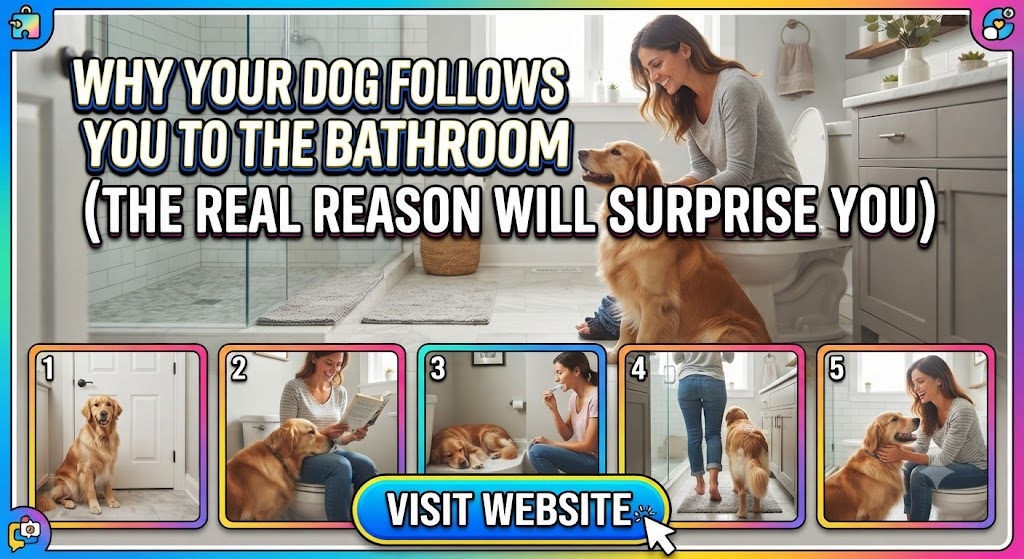

The Bathroom Bodyguard: Why Your Dog Refuses to Let You Pee Alone (And What Science Actually Says)
You’ve experienced it. You head toward the bathroom, hoping for thirty seconds of peace, only to hear the rhythmic patter-patter-patter of four paws following close behind. You try to shut the door, but a wet nose wedges into the crack. You successfully lock the door, and suddenly, a single furry paw begins to sweep under the frame like a scene from a canine horror movie. Or, if you leave the door open, you find yourself staring into a pair of soulful, unblinking eyes while you’re in your most vulnerable state.
To humans, this behavior is baffling, slightly awkward, and occasionally a little intrusive. We value our privacy in the “porcelain throne room.” To your dog, however, the bathroom is not a place of privacy—it is a place of high-stakes social interaction, safety, and sensory intrigue.
1. The Power of the Pack: Ancestral Instincts
To understand why your dog follows you into a six-by-six-foot tiled room, you have to go back thousands of years. Dogs are the descendants of wolves, and wolves are obligate social animals.
In the wild, there is no such thing as “me time.” In a pack environment, doing things together is a survival mechanism. Whether it’s hunting, traveling, or sleeping, the pack stays together for protection. When a member of the pack wanders off alone, they become a target for predators.
By following you into the bathroom, your dog is practicing their primal “pack mentality.” To them, you are the alpha or a key family member. When you move toward another room, their instinct screams, “Don’t let the leader go into a confined space alone! We must stay together for safety!”
The “Vulnerability” Factor
This instinct goes both ways. Have you ever noticed that your dog looks at you while they are pooping in the backyard? This isn’t because they’re a “creep.” In the wild, an animal is at its most vulnerable when it is eliminating. They cannot run or fight effectively in that position.
When your dog stares at you while they do their business, they are checking to see if you are watching their back. Conversely, when you are on the toilet, your dog likely perceives that you are in a vulnerable position. They aren’t staring to be weird; they are standing guard. They are your “lookout” to ensure no mountain lions burst through the shower curtain while you’re busy.
2. The “Velcro Dog” Phenomenon: Breed and Personality
While all dogs have pack instincts, some are more prone to following their owners than others. These are affectionately known as “Velcro Dogs.” If you own a breed that was specifically developed to work closely with humans, you are far more likely to have a bathroom shadow.
Working and Herding Breeds
Breeds like German Shepherds, Border Collies, and Australian Shepherds were bred to take direction from humans constantly. They are hardwired to “check-in” with their handler. If you move, they move. To a Herding dog, a human moving toward the bathroom is a “stray sheep” that needs to be monitored.
Hound Breeds
Labrador Retrievers and Golden Retrievers are famous for their “fomily-first” attitude. They thrive on physical proximity and positive reinforcement. They don’t just want to be in the same house as you; they want to be in the same breathable air space as you.
Why Your Dog Follows You to the Bathroom (It’s Not What You Think)
1. Why Does Your Dog Follow You Everywhere?
- Understanding “Velcro Dogs”
- The Natural Pack Instinct
- Why Dogs Love Staying Close to Their Favorite Human
2. The Real Reason Your Dog Follows You to the Bathroom
- You’re Part of Their Family Pack
- They Feel Safe When You’re Nearby
- They Simply Don’t Want to Miss Anything
3. Is Your Dog Trying to Protect You?
- Dogs Are Natural Guardians
- Why Some Breeds Are More Protective Than Others
- Protection vs. Curiosity
4. Your Dog Is Curious About Everything You Do
- Why Closed Doors Fascinate Dogs
- The Mystery Behind Bathroom Visits
- Curiosity Is a Normal Canine Trait
5. Could Separation Anxiety Be the Cause?
- Signs of Healthy Attachment
- Warning Signs of Separation Anxiety
- When Following Becomes a Problem
6. Your Dog Has Learned a Routine
- How Daily Habits Shape Dog Behavior
- Why Dogs Love Predictable Schedules
- Reinforcing Following Behavior Without Realizing It
7. Some Dog Breeds Are Naturally More Clingy
- Labrador Retrievers
- Golden Retrievers
- Border Collies
- German Shepherds
- Cavalier King Charles Spaniels
- Vizslas and Other “Velcro” Breeds
8. Does Age Affect Bathroom-Following Behavior?
- Puppies Want Constant Supervision
- Adult Dogs Follow Out of Habit
- Senior Dogs Seek Comfort and Security
9. Is It Normal for Dogs to Watch You in the Bathroom?
- Why Eye Contact Matters
- Trust, Bonding, and Social Behavior
- What Your Dog Is Really Thinking
10. Signs Your Dog Is Following You Out of Love
- Relaxed Body Language
- Happy Tail Wagging
- Calm and Comfortable Behavior
- Respecting Your Space When Asked
11. When Should You Be Concerned?
- Excessive Whining or Barking
- Panic When Doors Close
- Destructive Behavior When Left Alone
- Loss of Appetite or Stress
12. How to Help an Overly Attached Dog
- Build Independence Through Training
- Reward Calm Alone Time
- Provide Interactive Toys and Puzzle Feeders
- Create a Comfortable Safe Space
- Practice Short Departures
13. Common Myths About Dogs Following You
- Myth: They Need to Go Outside
- Myth: They’re Always Hungry
- Myth: They’re Being Dominant
- Myth: They Can Sense Danger Every Time
14. Vet-Approved Tips for Encouraging Healthy Independence
- Positive Reinforcement Techniques
- Daily Physical Exercise
- Mental Enrichment Activities
- Consistent Routines
- Avoid Punishing Clingy Behavior
15. Frequently Asked Questions
- Why does my dog wait outside the bathroom door?
- Why does my puppy follow me everywhere?
- Should I let my dog into the bathroom?
- Can following behavior be a sign of illness?
- How do I know if my dog has separation anxiety?
16. Final Thoughts
- Understanding Your Dog’s Loyalty
- When Bathroom-Following Is Completely Normal
- Building a Healthy, Balanced Bond With Your Dog
3. The “Forbidden Room” Mystery (Curiosity and FOMO)
Dogs are naturally curious creatures, and they are also masters of “FOMO” (Fear Of Missing Out).
In a dog’s mind, the bathroom is a room of mysteries. You go in there, you close the door, and strange noises happen. There’s the sound of running water, the “whoosh” of the toilet flushing, and the crinkling of toilet paper.
To a dog, a closed door is a challenge. It represents a barrier between them and the “pack.” When you close that door, their curiosity peaks. They wonder:
- Are you eating something in there?
- Are you playing with a secret toy?
- Is there another dog in there?
- Why am I being excluded from this ritual?
By following you in before you can shut the door, they are ensuring they aren’t left out of whatever “party” is happening in the smallest room of the house.
4. The Science of Scent: An Olfactory Playground
We perceive the bathroom as a place for hygiene, but a dog perceives it as a sensory library. A dog’s sense of smell is anywhere from 10,000 to 100,000 times more acute than a human’s.
Your Unique “Scent Profile”
The bathroom is concentrated with your scent. From the towels you use to the laundry basket in the corner, the bathroom smells more like “you” than almost any other room. Dogs find the scent of their owners incredibly comforting; it triggers the release of oxytocin (the “love hormone”) in their brains.
The “Toilet” Fascination
We find it gross, but dogs find the toilet fascinating. It is a source of fresh (to them) water and a plethora of interesting smells. When you are in the bathroom, they are taking the opportunity to do some “environmental investigating.” They are sniffing the floor, the trash can, and even you, to gather data about where you’ve been and what you’ve been doing.
5. Positive Reinforcement: Who Trained Whom?
Sometimes, we are the reason our dogs follow us to the bathroom. Think about your routine.
When your dog follows you into the bathroom, what do you do?
- You look at them.
- You talk to them (“Hey buddy, I’m just peeing!”).
- You might even reach down and scratch their ears while you’re sitting there.
To a dog, this is a win. You are a captive audience. You aren’t looking at your phone (usually), you aren’t cooking, and you aren’t working. You are sitting still and giving them attention.
If you have ever petted your dog or spoken to them in the bathroom, you have “conditioned” them to believe that the bathroom is a prime location for one-on-one bonding time. They aren’t following you to be annoying; they are following you because, in the past, that behavior resulted in a reward (your attention).
6. The Oxytocin Connection
Studies have shown that when dogs and humans gaze into each other’s eyes, both experience a surge in oxytocin. This is the same chemical bond that forms between a mother and her newborn baby.
Because many owners feel “relaxed” or “at home” in the bathroom, the dog picks up on that energy. The bathroom becomes a low-stress environment where bonding occurs. Your dog follows you because being near you makes them feel chemically happy. It is quite literally a biological “high” for them to be in your presence.
7. When It’s Not Just Love: Identifying Separation Anxiety
While following you to the bathroom is usually a harmless sign of affection, there is a line between a “Velcro dog” and a dog suffering from Separation Anxiety.
It is important to distinguish between “I want to be with you” and “I cannot be without you.”
Signs of Separation Anxiety:
- Destructive Behavior: If you lock the door and your dog starts chewing the door frame or scratching the carpet raw.
- Excessive Vocalization: Constant whining, howling, or barking the moment the door is shut.
- Distress Signals: Panting, pacing, or salivating excessively when they realize you are moving to a room they cannot enter.
- Self-Harm: Licking their paws raw or hurting themselves trying to get through the door.
If your dog displays these symptoms, their bathroom stalking isn’t about curiosity or protection—it’s about a deep-seated fear of being alone. In these cases, it’s best to consult with a professional animal behaviorist or a veterinarian to help manage their anxiety.
8. Can You Train a Dog to Stop Following You?
If you’ve decided that you’ve had enough of the “audience” and want to reclaim your privacy, you can train your dog to stay behind. It requires patience and consistency.
The “Place” Command
One of the most effective ways to stop a bathroom shadow is to teach the “Place” command. This involves training your dog to go to a specific bed or rug and stay there until released.
- Direct your dog to their bed.
- Reward them with a treat when they sit or lie down.
- Gradually increase the distance you move away while they stay.
- Eventually, you should be able to walk toward the bathroom while they remain on their “place.”
Desensitization
If your dog reacts the moment you stand up, try “meaningless” movement. Stand up, walk three steps toward the bathroom, then sit back down. Do this until the dog stops reacting to your movement. You are teaching them that you moving doesn’t always mean something exciting is happening.
Give Them a “Job”
If your dog follows you because they are bored, give them a high-value treat or a puzzle toy (like a Kong filled with peanut butter) right before you head to the bathroom. This creates a positive association with you being away and gives them something else to focus on.
9. The Benefits of Having a Bathroom Buddy
Despite the lack of privacy, there are actually some surprising benefits to your dog’s bathroom habits:
- Lowered Blood Pressure: Petting a dog for even a few minutes can lower your cortisol levels and blood pressure.
- Safety: While unlikely, if you were to slip and fall in the bathroom, having your dog there means someone knows you’re in trouble.
- Emotional Support: For people with high stress or anxiety, the constant presence of a loyal friend can be incredibly grounding.
10. Fun Facts About Dogs and Privacy
- They don’t understand the concept of nudity. Dogs don’t care if you’re dressed or not. In fact, they probably prefer when you’re “natural” because they can smell your pheromones more clearly.
- They think you’re weird for using a toilet. Since dogs use scent to mark territory and communicate, the idea of “flushing away” all that valuable information is likely very confusing to them.
- They mirror your routine. If you go to the bathroom every morning at 7:00 AM, your dog’s internal clock knows it. They aren’t just following you; they are participating in the “morning ritual.”
Summary: Why Your Dog Is Your Shadow
At the end of the day, your dog follows you to the bathroom because you are their entire world. In their eyes, you are the leader of the pack, the provider of food, the source of affection, and the person they are sworn to protect.
They don’t see the bathroom as a place of “private business.” They see it as:
- A Safety Check: Making sure you’re okay while you’re vulnerable.
- A Scent Session: Soaking in the concentrated smell of their favorite person.
- A Bonding Opportunity: Getting those extra ear scratches while you’re stationary.
- An Instinctual Habit: Following the pack because that’s what dogs do.
So, the next time you see those two eyes staring at you from the bathroom floor, or a wet nose nudging your knee while you’re trying to read the news on your phone, remember: It’s a compliment. You have a bodyguard who loves you so much, they’re willing to follow you into a small, loud, watery room just to make sure you make it out okay.
Is it weird? Yes. Is it love? Absolutely.
Frequently Asked Questions (FAQ)
Q: Does my dog think I’m in trouble when I’m in the shower? A: Possibly. Many dogs hate water, so when they see you standing under a literal waterfall, they may be genuinely concerned for your safety. This is why some dogs whine or try to “lick” the water off you when you get out.
Q: Why does my dog lick my legs when I get out of the shower? A: This is a combination of things. First, they are “grooming” you, which is a social bonding behavior. Second, they likely enjoy the taste of the water or the scent of your soap/body wash. Third, they are trying to replace the “clean” smell with their own scent to re-establish the pack bond.
Q: Should I be worried if my dog stops following me to the bathroom? A: Not necessarily. As dogs age, they may become more independent or find it harder to get up and down frequently. However, if your dog suddenly becomes lethargic or stops showing interest in being near you at all, it’s worth a check-up with the vet.
Q: My dog stares at the wall in the bathroom, not at me. Why? A: Dogs have incredible hearing. They might be hearing water running through the pipes behind the wall or even small pests (like spiders or mice) that you can’t hear. To them, the bathroom is a symphony of weird plumbing noises.