
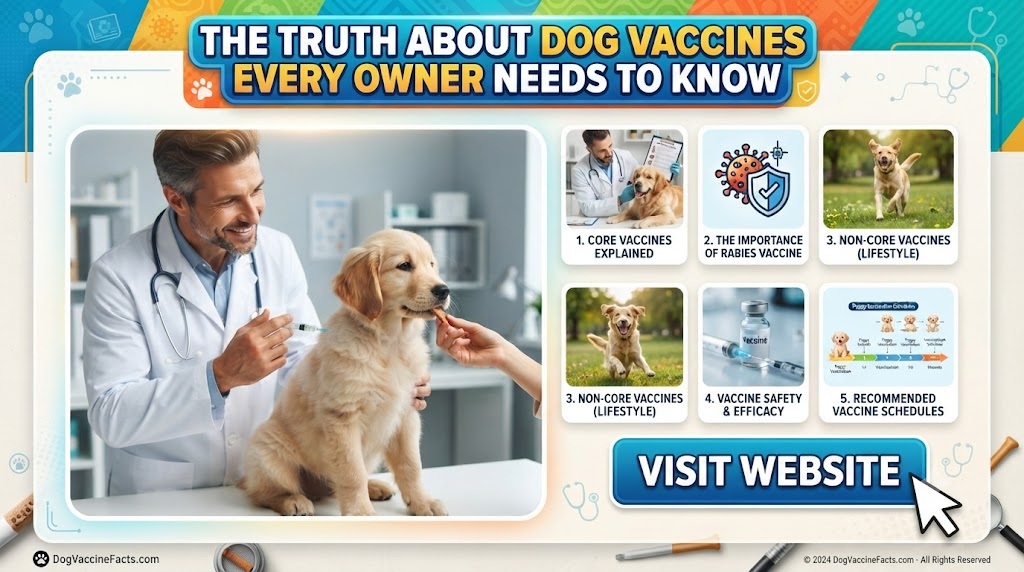

The Truth About Dog Vaccines: The Ultimate Guide to Protecting Your Best Friend Without the Overload
As a dog owner, your primary mission is to ensure your four-legged companion lives a long, healthy, and vibrant life. You navigate the world of high-quality kibble, the best harnesses for pulling, and the most durable chew toys. But when it comes to healthcare, few topics are as polarizing, confusing, and essential as dog vaccines.
In an era of information overload, pet parents are often caught between two extremes: the traditional veterinary push for annual “everything” boosters and the rising “anti-vax” sentiment in the pet community. Somewhere in the middle lies the truth—a science-based, lifestyle-dependent approach that prioritizes your dog’s immunity while minimizing unnecessary risks.
This is the deep dive you’ve been looking for. We are pulling back the curtain on canine immunology, the “core” vs. “non-core” debate, the reality of side effects, and the game-changing world of titer testing.
1. The Science of Immunity: How Vaccines Actually Work
Before we can discuss which shots your dog needs, we have to understand what a vaccine does inside that furry body.
At its simplest, a vaccine is a “practice run” for the immune system. Vaccines contain antigens—weakened, killed, or partial versions of a virus or bacteria. When injected, these antigens don’t cause the disease, but they do mimic it enough to trick the immune system into producing antibodies and “memory cells.”
If your dog is later exposed to the real, “wild” version of the disease (like Parvovirus on a sidewalk or Rabies from a raccoon), their immune system recognizes the intruder instantly. Instead of a slow response that allows the disease to take hold, the body launches a massive, pre-planned counter-strike.
The Two Types of Immunity
- Active Immunity: This is what vaccines provide. The dog’s body does the work to create its own defense.
- Passive Immunity: This is what puppies get from their mother’s milk (colostrum). It is temporary but vital. This is also why puppy shots are given in a series—we have to wait for the mother’s antibodies to fade so the puppy’s own immune system can take over.
2. Core Vaccines: The Non-Negotiables
In the veterinary world, “Core” vaccines are those that every dog should receive, regardless of where they live or what they do. These protect against diseases that are either highly contagious, have a high mortality rate, or are a threat to human health (zoonotic).
Rabies (The Legal Requirement)
Rabies is 100% fatal to dogs and nearly 100% fatal to humans if not treated immediately. Because of this, it is the only vaccine mandated by law in almost every jurisdiction. Even if your dog is 100% indoors, a bat in the house or a freak encounter through a screen door can lead to exposure.
Canine Distemper (CDV)
Distemper is a devastating multi-systemic virus. It attacks the respiratory, gastrointestinal, and central nervous systems. Symptoms include discharge from the eyes/nose, fever, and eventually seizures or paralysis. It is often fatal, and survivors frequently suffer lifelong neurological damage.
Canine Parvovirus (CPV)
Often called “Parvo,” this is the nightmare of every puppy owner. It is an extremely hardy virus that lives in the soil for years. It causes severe, bloody vomiting and diarrhea, leading to rapid dehydration. Without intensive (and expensive) hospital care, the survival rate is tragically low.
Canine Adenovirus Type 1 (Infectious Canine Hepatitis)
This virus targets the liver, kidneys, and lungs. While less common than Parvo today thanks to vaccination, it remains a severe threat that can cause sudden death in young dogs.
3. Non-Core Vaccines: The “Lifestyle” Shots
This is where the “Truth” becomes nuanced. Not every dog needs every vaccine. “Non-core” vaccines should be administered based on your dog’s specific environment, travel habits, and social life.
Bordetella Bronchiseptica (Kennel Cough)
- Who needs it? Dogs that go to daycare, boarding facilities, dog parks, or grooming salons.
- The Truth: It’s like the human “flu shot.” It doesn’t prevent all coughing, but it reduces the severity of the most common bacterial strain.
Leptospirosis
- Who needs it? Dogs that live near forests, farms, or standing water (ponds, puddles).
- The Truth: Lepto is a bacteria spread through the urine of wildlife (rats, deer, raccoons). It can cause kidney and liver failure and can be passed to humans. If you live in a city with a rat problem or a rural area with wildlife, this is often considered “semi-core.”
Lyme Disease
- Who needs it? Dogs in tick-heavy regions (specifically the Northeast, Mid-Atlantic, and Upper Midwest of the US).
- The Truth: Tick prevention is your first line of defense, but the vaccine provides an extra layer of security for dogs who are frequently hiking or living in the woods.
Canine Influenza (Dog Flu)
- Who needs it? Social dogs in areas where outbreaks are currently occurring.
- The Truth: Like Bordetella, it is highly contagious in social settings. It is rarely fatal but can lead to pneumonia.
4. The Puppy Series: Why So Many Shots?
One of the biggest frustrations for new puppy owners is the constant trips to the vet. Why can’t they just get one shot and be done?
The answer lies in Maternal Antibody Interference.
Puppies receive antibodies from their mother’s milk that protect them for the first few weeks of life. However, these same antibodies can neutralize a vaccine before the puppy’s immune system has a chance to learn from it.
Because we don’t know exactly when a specific puppy’s maternal antibodies will fade (it could be at 8 weeks or 16 weeks), vets give a series of shots (usually at 8, 12, and 16 weeks). This ensures that as soon as the mother’s protection drops, the vaccine is there to take over. If you stop the series too early, your puppy might be left with a “window of vulnerability.”
5. The Great Controversy: Over-Vaccination and Side Effects
For decades, the standard of care was “Annual Boosters.” Every year, your dog got the whole “cocktail.” However, modern research from organizations like the American Animal Hospital Association (AAHA) has changed the game.
The Risk of Over-Vaccination
We now know that many vaccines (like Distemper and Parvo) provide immunity that lasts much longer than one year—often three years, and in some cases, for the life of the dog. Giving vaccines more often than necessary provides no extra benefit but does increase the risk of an adverse reaction.
Potential Side Effects
- Mild: Lethargy, slight fever, and soreness at the injection site (normal).
- Moderate: Hives, facial swelling, and “lump” at the injection site.
- Severe (Anaphylaxis): Sudden vomiting, diarrhea, collapse, or difficulty breathing. This is a medical emergency.
- Long-Term Concerns: Some holistic vets and researchers are concerned about “Vaccinosis,” a term used to describe chronic conditions (like allergies, autoimmune issues, or injection-site sarcomas) they believe may be triggered by over-stimulation of the immune system.
6. Titer Testing: The Scientific Middle Ground
If you are worried about over-vaccinating but terrified of your dog catching a deadly disease, Titer Testing is your best friend.
A titer test is a simple blood test that measures the level of antibodies in your dog’s blood for specific diseases (usually Parvo and Distemper).
- Positive Titer: Your dog has sufficient antibodies. They are protected. You do not need to vaccinate this year.
- Negative Titer: Your dog’s antibody levels have dropped. They may be at risk and should receive a booster.
The Catch: Titer tests are often more expensive than the vaccine itself, and they are not currently accepted as a replacement for the Rabies vaccine in most legal jurisdictions. However, for “core” viruses, it is the most medically sound way to ensure protection without unnecessary chemicals.
7. Debunking Common Myths
Myth 1: “My dog is small, so they should get a smaller dose.”
The Truth: Vaccines are not dose-dependent like antibiotics or ibuprofen. Whether it’s a 2lb Chihuahua or a 150lb Great Pyrenees, the immune system requires the same amount of antigen to trigger a response. However, some vets will “split” the appointments (giving one shot one week and another two weeks later) for tiny dogs to avoid overwhelming their systems.
Myth 2: “Indoor dogs don’t need vaccines.”
The Truth: Viruses like Parvo can be carried into your house on your shoes. Rabies can be carried by a bat that gets into your attic. While the risk is lower, it is not zero.
Myth 3: “Vaccines cause autism in dogs.”
The Truth: This is a carry-over from a debunked human medical study. There is no such thing as canine autism linked to vaccines. Dogs can have neurological issues, but they are not the result of the Rabies shot.
Myth 4: “Natural immunity is better.”
The Truth: Natural immunity comes from surviving the disease. The “natural” way to get Parvo immunity is to get Parvo—which kills the majority of puppies it infects. Vaccines provide the immunity without the life-threatening illness.
8. Questions to Ask Your Vet
Don’t be a passive participant in your dog’s healthcare. At your next wellness check, ask these questions:
- “Based on my dog’s lifestyle (hiking, daycare, city walking), which non-core vaccines do you honestly recommend?”
- “Are we following the AAHA 3-year protocol for core vaccines?”
- “Can we perform a titer test for Distemper and Parvo this year instead of a booster?”
- “Is there a ‘thimerosal-free’ (mercury-free) Rabies vaccine available?”
- “What should I look for tonight to ensure my dog isn’t having an allergic reaction?”
9. Preparing for Vaccine Day: Tips for Success
To minimize the stress on your dog’s body, follow these best practices:
- Don’t “Stack” Appointments: Avoid doing a vaccine on the same day as a surgery, a heavy flea/tick treatment application, or a stressful grooming session.
- Monitor: Stay home with your dog for at least 4-6 hours after a vaccination to watch for reactions.
- Pre-medication: If your dog has had a mild reaction (hives) in the past, ask your vet about giving Benadryl (diphenhydramine) prior to the shot.
- Record Keeping: Keep a folder with the dates, brand names, and lot numbers of every vaccine. This is vital for boarding, travel, and in case of a product recall.
10. The Verdict: Balance is Key
The “truth” about dog vaccines isn’t found in a “one-size-fits-all” mandate or in total avoidance. It is found in individualized care.
Vaccines are, without a doubt, one of the greatest triumphs of modern veterinary medicine. They have saved millions of dogs from agonizing deaths and have nearly eradicated diseases that once wiped out entire litters. However, the old way of “more is better” is dead.
The most responsible thing you can do for your dog is to:
- Protect them during their vulnerable puppy months with a complete core series.
- Respect the law regarding Rabies.
- Use science (Titers) to determine if boosters are necessary as they age.
- Tailor lifestyle vaccines to their actual risks.
By being an informed advocate for your pet, you ensure they stay protected from the dangers of the world without being burdened by unnecessary medical intervention. Your dog trusts you with their life—make sure you’re making the right calls.
Summary Table: Quick Reference for Pet Parents
| Vaccine | Type | Frequency | Why? |
|---|---|---|---|
| Rabies | Core | Every 1 or 3 years (Legal) | Fatal, Zoonotic, Mandatory |
| DHPP/DAPP | Core | Every 3 years (after puppy series) | Prevents Parvo, Distemper, etc. |
| Bordetella | Non-Core | Every 6-12 months | For social dogs (Kennel Cough) |
| Leptospirosis | Non-Core | Every 12 months | For dogs near wildlife/water |
| Lyme | Non-Core | Every 12 months | For dogs in tick-endemic areas |
| Titer Test | Alternative | Every 1-3 years | Measures existing immunity levels |
Disclaimer: This article is for informational purposes only and does not constitute veterinary medical advice. Always consult with a licensed veterinarian to create a healthcare plan specifically for your dog.