
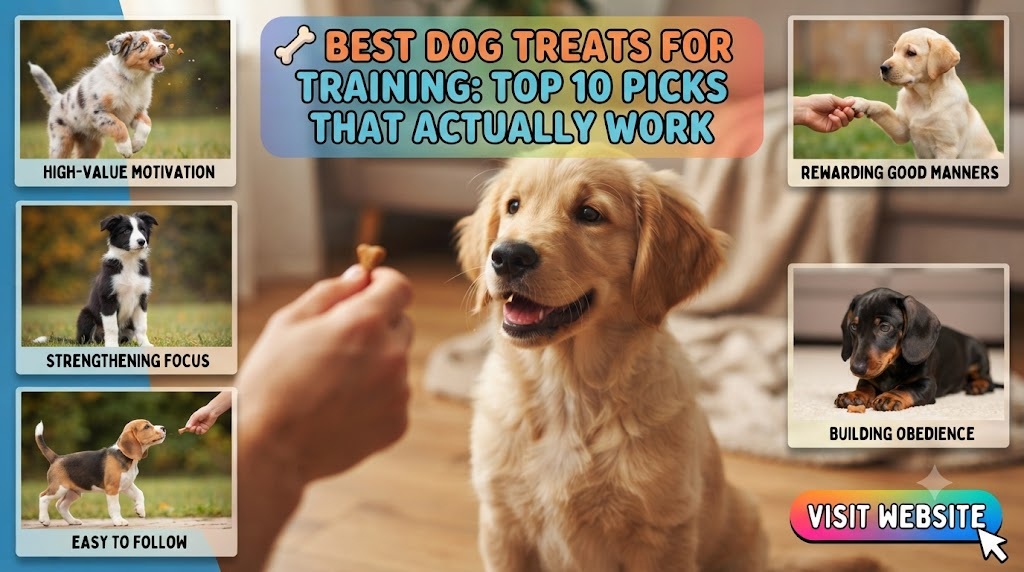

10 High-CTR, Viral Title Ideas for Dog Training Treats
- Stop Being Ignored: The 15 Best Training Treats That Will Make Your Dog Listen Every Time
- From Chaos to Calm: Professional Trainers Reveal Their “Secret Weapon” Treats
- The Ultimate Dog Training Treat Bible: 50+ Options for Every Breed and Budget
- Is Your Dog a “Hard Case”? These High-Value Treats Work When Nothing Else Does
- Puppy Training 101: Why Your Choice of Treat is More Important Than Your Command
- The Science of Snacking: How the Right Treats Can Double Your Dog’s Learning Speed
- Healthy, Cheap, and Irresistible: 10 DIY Training Treats You Already Have in Your Kitchen
- Why Store-Bought Treats Might Be Ruining Your Training (and What to Use Instead)
- The “Jackpot” Strategy: How to Use High-Value Treats to Stop Leash Pulling and Barking
- Small Bites, Big Results: The Comprehensive Guide to Low-Calorie Training Rewards
The Ultimate Guide to the Best Dog Treats for Training: Secrets to a Well-Behaved Pup
Training a dog is one of the most rewarding experiences a pet parent can have, but it is often fraught with frustration. You’ve seen the videos: a perfectly poised Border Collie following every command with laser focus. Then you look at your own dog, who is currently more interested in a stray piece of lint than your “sit” command.
The difference often isn’t the dog’s intelligence; it’s the currency.
In the world of canine psychology, treats are more than just snacks—they are the paycheck your dog receives for a job well done. If the paycheck is too small or doesn’t taste good, the “employee” stops working. This comprehensive guide will explore the science of reward-based training, the best store-bought and homemade treats, and how to use them to transform your dog into a well-mannered companion.
Why the “Right” Treat Matters: The Psychology of Positive Reinforcement
Positive reinforcement is the gold standard of modern dog training. It involves rewarding a desired behavior to increase the likelihood of that behavior being repeated. While praise and play are excellent rewards, food remains the most powerful motivator for the vast majority of dogs.
The Dopamine Connection
When a dog receives a high-value treat, their brain releases dopamine. This “feel-good” chemical creates a positive association with the command they just followed. Over time, the command itself begins to trigger a positive emotional response. To maximize this, the treat must be desirable enough to break through the “environmental noise”—like a squirrel running by or another dog barking.
The Currency System
Think of treats as different denominations of money:
- Low Value (Kibble): $1 bill. Good for easy tasks in a quiet house.
- Medium Value (Store-bought treats): $20 bill. Great for general obedience and learning new tricks.
- High Value (Chicken, Cheese, Liver): $100 bill. Reserved for difficult environments, recall (coming when called), and high-distraction scenarios.
The Anatomy of a Perfect Training Treat
Not all treats are created equal. If you use a large, crunchy biscuit for training, your session will be slow and ineffective. Here is what you should look for:
1. Size: Think Small
A training treat should be no larger than a pea (and even smaller for toy breeds). The goal is for the dog to swallow it instantly and look back at you for more. If they have to chew, the “momentum” of the training session is lost.
2. Texture: Soft and Moist
Soft treats are generally more aromatic and easier to consume quickly. Crunchy treats produce crumbs and take time to masticate, which can distract the dog from the task at hand.
3. Scent: The “Stinkier,” the Better
Dogs navigate the world through their noses. A treat that smells strongly of salmon, liver, or bacon will capture their attention much faster than a dry, bland biscuit.
4. Nutrition: Clean Ingredients
Since you might give your dog 50 to 100 treats during an intensive training session, the ingredients matter. Look for high protein content and avoid fillers like corn, soy, and artificial dyes.
Top Store-Bought Training Treats: Our Top Picks
The market is flooded with options, but these are the consistent winners among professional dog trainers and behaviorists.
The Gold Standard: Freeze-Dried Liver
Whether it’s beef, chicken, or lamb liver, freeze-dried organ meats are the ultimate “high-value” reward. They are 100% meat, extremely smelly, and most dogs will do anything for a single piece.
- Pros: Single ingredient, high protein, irresistible to most dogs.
- Cons: Can be dusty; expensive.
The All-Rounder: Zuke’s Mini Naturals
These are arguably the most popular training treats in America. They are tiny, soft, and come in various flavors like Rabbit, Duck, and Salmon. At less than 3 calories per treat, they are perfect for long sessions.
- Pros: Perfect size, low calorie, widely available.
- Cons: Some dogs find them a bit “medium-value” compared to real meat.
The “Stinky” Favorite: Blue Buffalo Blue Bits
These moist, heart-shaped morsels are packed with DHA to support cognitive development (perfect for puppies). They have a strong aroma that keeps dogs engaged.
- Pros: Soft texture, added nutritional benefits.
- Cons: Slightly larger than some other mini-treats; may need to be broken in half for tiny dogs.
The Budget-Friendly Professional Choice: Tricky Trainers
Often used by agility competitors, these treats have a “non-greasy” texture, making them easy to keep in your pocket without ruining your clothes.
- Pros: Crunchy and soft versions available, very affordable.
- Cons: Contain more fillers than premium freeze-dried options.
High-Value “Jackpot” Treats: When You Need 100% Focus
Sometimes, even the best store-bought treat won’t cut it. If you are working on a life-saving skill like Emergency Recall or helping a dog overcome a phobia (desensitization), you need the big guns.
- Plain Boiled Chicken: The universal favorite. It’s lean, easy on the stomach, and highly visible.
- String Cheese: Most dogs are “cheese-obsessed.” It’s easy to peel off tiny slivers as you go.
- Hot Dogs: While not the healthiest for daily consumption, the saltiness and smell of a hot dog can refocus a dog instantly. (Use sparingly).
- Squeeze Tubes (Peanut Butter or Baby Food): For dogs that get too “nippy” when taking treats, a refillable silicone tube filled with xylitol-free peanut butter or meat-based baby food allows them to lick the reward, which is also a naturally calming behavior.
Best Training Treats for Puppies
Puppies have sensitive stomachs and developing teeth. Their training treats need to be extra soft and highly digestible.
- Wellness Soft Puppy Bites: Specifically formulated for growth, containing DHA and Omega-3s.
- Small pieces of banana or blueberry: Great for low-distraction indoor training and provides antioxidants.
- Softened Kibble: If you have a highly food-motivated puppy, using their actual meal as training rewards is a great way to prevent obesity. Simply soak the kibble in a bit of warm water or low-sodium chicken broth to make it more enticing.
Healthy and Low-Calorie Alternatives
If your dog is watching their weight, or if you’re doing a 2-hour training seminar, you need options that won’t result in a “pudgy” pup.
- Green Beans: Fresh or frozen, many dogs love the crunch. They are virtually calorie-free.
- Carrot Discs: Great for larger dogs, though they take a bit longer to chew.
- Air-Popped Popcorn: No salt, no butter. It’s a fun, lightweight reward for indoor tricks.
- Dehydrated Sweet Potato: A chewy, high-fiber option that occupies the dog for a few seconds longer.
DIY Dog Training Treats: Easy Recipes
Making your own treats allows you to control exactly what goes into your dog’s body. Plus, it’s significantly cheaper.
The “Tuna Fudge” Recipe
Professional trainers love this because it’s “squishy,” smelly, and doesn’t crumble.
- Ingredients: 2 cans of tuna (in water, not drained), 2 eggs, 1.5 cups of flour (oat or rice flour works for gluten-free).
- Instructions: Mash the tuna and eggs together. Mix in the flour. Spread the paste into a greased 9×9 pan. Bake at 350°F (175°C) for 20 minutes. Once cooled, use a pizza cutter to create tiny cubes. Store in the fridge or freezer.
The Salmon Squeeze
Perfect for the “Squeeze Tube” method.
- Ingredients: 1 can of pink salmon, 1/2 cup of plain Greek yogurt.
- Instructions: Blend until smooth. Load into a travel-sized silicone tube.
How to Train Using Treats: Essential Tips for Success
Having the best treats in the world won’t help if your timing is off. Here is how to use treats like a pro:
1. The Power of the “Marker”
Before you give the treat, use a “marker.” This can be a clicker or a specific word like “Yes!” The marker tells the dog exactly which movement earned the reward.
- Process: Command -> Behavior -> Marker (Yes!) -> Treat.
2. Avoid “Bribing”
There is a massive difference between a reward and a bribe.
- Bribing: Showing the dog the treat to get them to do the behavior. (Dog won’t listen unless they see the food).
- Rewarding: The food is hidden in a pouch or pocket. The dog performs the action, and then the food appears.
3. The Variable Reinforcement Schedule
Once your dog knows a command (like “Sit”) 90% of the time in a quiet environment, stop giving a treat every single time. Start rewarding every second or third time, but always offer verbal praise. This creates a “gambler’s effect” where the dog works harder because they never know when the “jackpot” is coming.
4. Watch the Calories (The 10% Rule)
Treats should never exceed 10% of your dog’s daily caloric intake. If you have a heavy training day, reduce the amount of food you put in their dinner bowl to compensate.
Common Mistakes to Avoid
- Moving Too Fast: If your dog won’t take a treat they usually love, they are likely over-threshold (too stressed, scared, or excited). Move further away from the distraction.
- Repeating Commands: Don’t say “Sit, sit, sit.” Say it once. If they don’t do it, show them what you want, or wait. If you give a treat after the third time you say it, you’re teaching them they only have to listen on the third try.
- Using Boring Treats: If you’re at a busy dog park, kibble isn’t going to cut it. Always match the “value” of the treat to the “difficulty” of the environment.
Beyond the Treat: Transitioning to Life Rewards
The ultimate goal of training is a dog that listens because they want to work with you, not just because you’re a vending machine.
As your dog becomes an expert, start incorporating Life Rewards:
- “Sit” before I throw the ball.
- “Wait” before I open the car door.
- “Look at me” before you’re allowed to go sniff that bush.
By using the world as a reward, you reinforce the idea that you are the gateway to everything fun, making the treats an occasional (but highly appreciated) bonus.
Conclusion
Choosing the best dog treats for training is about understanding your individual dog’s preferences. Some dogs are motivated by the “crunch,” while others live for the “stink” of freeze-dried fish. By keeping a variety of low, medium, and high-value rewards in your arsenal, you can handle any training challenge—from the living room to the local park.
Invest in a good treat pouch, find that “high-value” flavor that makes your dog’s eyes light up, and remember: consistency and timing are just as important as the snack itself. Happy training!